

Drawn to the Sea
Ships of the Sea Is Reimagining Savannah History Through Comics and art
There is something wonderfully strange about turning old ships into comic books.
Not strange in the wrong way. Strange in the Savannah way. The kind of idea that sounds a little unexpected at first, then starts to make perfect sense the longer you sit with it.
Trusted by 70,000+ Savannah Locals
Get the stories, restaurant discoveries, events, and insider recommendations that locals already rely on.
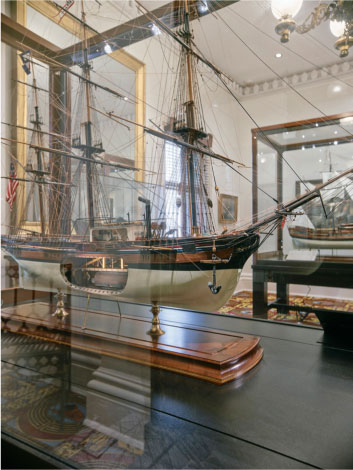
At Ships of the Sea Maritime Museum, the new exhibition “Drawn to the Sea: Maritime Stories from Savannah” takes four major ships connected to the city and hands their stories to sequential artists. Not historians writing wall text. Not another traditional museum catalog. Artists. Cartoonists. Storytellers. People who understand that sometimes history needs movement, panels, faces, tension, silence, and a page turn.
“I was talking with an illustrator slash sequential artist, and it gave me this idea,” curator Tania Sammons says. “Wouldn’t it be cool to do an exhibition featuring works and art model ships in our collection, and telling their stories, or parts of their stories through sequential art?”
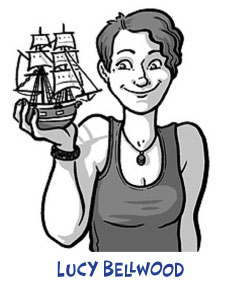
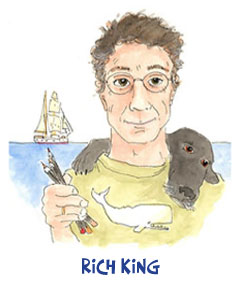
That idea became the backbone of the exhibit.The museum brought together four artists, each connected in different ways to ships, comics, storytelling, or Savannah itself. Lucy Bellwood, a California-based cartoonist who has sailed on tall ships. Rich King, a sailor and writer from Santa Cruz. Avery Hick, a Savannah artist and line cook at Shuk who was discovered through Neighborhood Comics’ artist-in-residence program. And Sharon Norwood, a multidisciplinary artist making her first move into cartooning.


The result is not just an exhibit. It is also a comic book, published with support from Lee Heidel of Neighborhood Comics.
“You can kind of think of it as an exhibition catalog,” Sammons says. “But in a way, it’s kind of the reverse. Usually you’ll see an exhibition catalog that supplements the exhibition, but in this way, I kind of think of it as the exhibition supplements the comic book.” That is the interesting part.
The comic book carries the stories. The exhibit shows how those stories were made. Sketches. Process work. Context. Artifacts. Decisions. Each artist gets a wall in the museum’s atrium, and each wall opens a different door into Savannah’s maritime past.
The four ships were not chosen randomly. They are the major ships visitors encounter when moving from the gift shop into the museum’s ballroom, each one tied directly to Savannah’s history. The artists were invited to choose from that group, and somehow, without being assigned, each selected a different ship.
“They all picked the ship that I sort of had in my head, but I didn’t tell them that ahead of time,” Sammons says.
That kind of thing happens when a project has the right people around it.
Avery Hick gravitated toward the Steamship Savannah, which makes sense once you hear him described. Sammons says he is deeply interested in technology, transportation, and innovation.
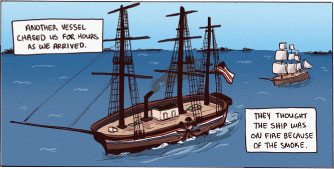
The Steamship Savannah was a three-masted sailing ship with paddle wheels attached, the first steamship to cross an ocean.
Its connection to Savannah runs deep. William Scarborough, whose home now houses the museum, was lead investor and president of the ship.
Molly Carrott Taylor, executive director of Ships of the Sea, explains that the ship’s legacy even helped shape National Maritime Day.
“President Roosevelt asked his team in 1933 to find National Maritime Day, and they said, oh, let’s do May 22, the day the Savannah left the port of Savannah to go across the ocean,” Taylor says.
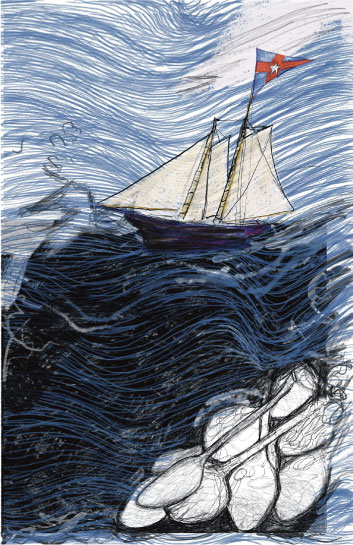
Hick’s part of the exhibit extends beyond the printed comic. He is creating a large transportation timeline on his wall, connecting the Steamship Savannah to broader ideas about technology, motion, and the future. There is even a mirror involved, continuing a visual device from his comic.
“Now you as a viewer are looking into the mirror, and you can contemplate the past and future of technology,” Sammons says.
That is where this exhibition seems to find its real pulse. It is not simply saying, here is a ship. It is asking what ships meant. What they carried. What they changed. Who they carried into danger, opportunity, loss, and survival.
Taylor makes clear that the stories are not lightweight just because they are told through comics.
“It is honestly really touching, really sad,” she says. “It will make you cry. People die. It’s really moving in a shocking, like, I didn’t expect that. It’s really not funny.”
That matters. Comics are often mistaken as simple. But sequential art can do something museums sometimes struggle to do. It can make history feel human without flattening it. A face in a panel can hold fear. A quiet frame can carry grief. A ship can become less of an object and more of a vessel for lives that actually happened.
For Ships of the Sea, that approach also opens the door to new audiences.
“Graphic novels and comics are very popular and seem to be increasingly popular,” Sammons says. “There’s more and more bookshelves for those sections in book-stores. I just thought this would be a really interesting way for us to tap into maybe some younger audiences and other audiences who might not be coming into the museum.”
That has become part of the museum’s larger shift under Taylor’s leadership.
Ships of the Sea has always had one of the most interesting physical spaces in Savannah, but Taylor has pushed themuseum toward something more active, more community-facing, more willing to experiment. She talks about the place with the energy of someone who knows the institution has room to stretch.
“We feel really entrepreneurial in what we can put up, how we engage our community, trying to be creative and do new things that Telfair can’t do, or that other smaller spaces maybe don’t do,” Taylor says. Sammons sees that too.
“Molly has been so open,” she says. “She’s open to people’s ideas. She’s not afraid to take risks, and I think that it’s a real benefit to Ships of the Sea and to our community in general.”
That openness has already reshaped the museum’s education work. In 2024, Ships of the Sea launched a more robust education program, bringing in 2,400 kids that year, then 4,200 kids in 2025. With “Drawn to the Sea,” the museum sees a chance to connect children to maritime history through a form that already feels approachable.
“Because cartoons are so approachable with children, we have a SCAD intern who’s developing a small comic book,” Taylor says. “Younger kids can just color it in. Older kids can add text to the text bubbles.”
That might be the quiet brilliance of the whole thing. The exhibit is smart enough for adults, emotional enough to surprise people, and accessible enough for kids to walk in and understand that history is not dead. In fact, it’s drawn to life, right here at Ships of the Sea Maritime Museum.
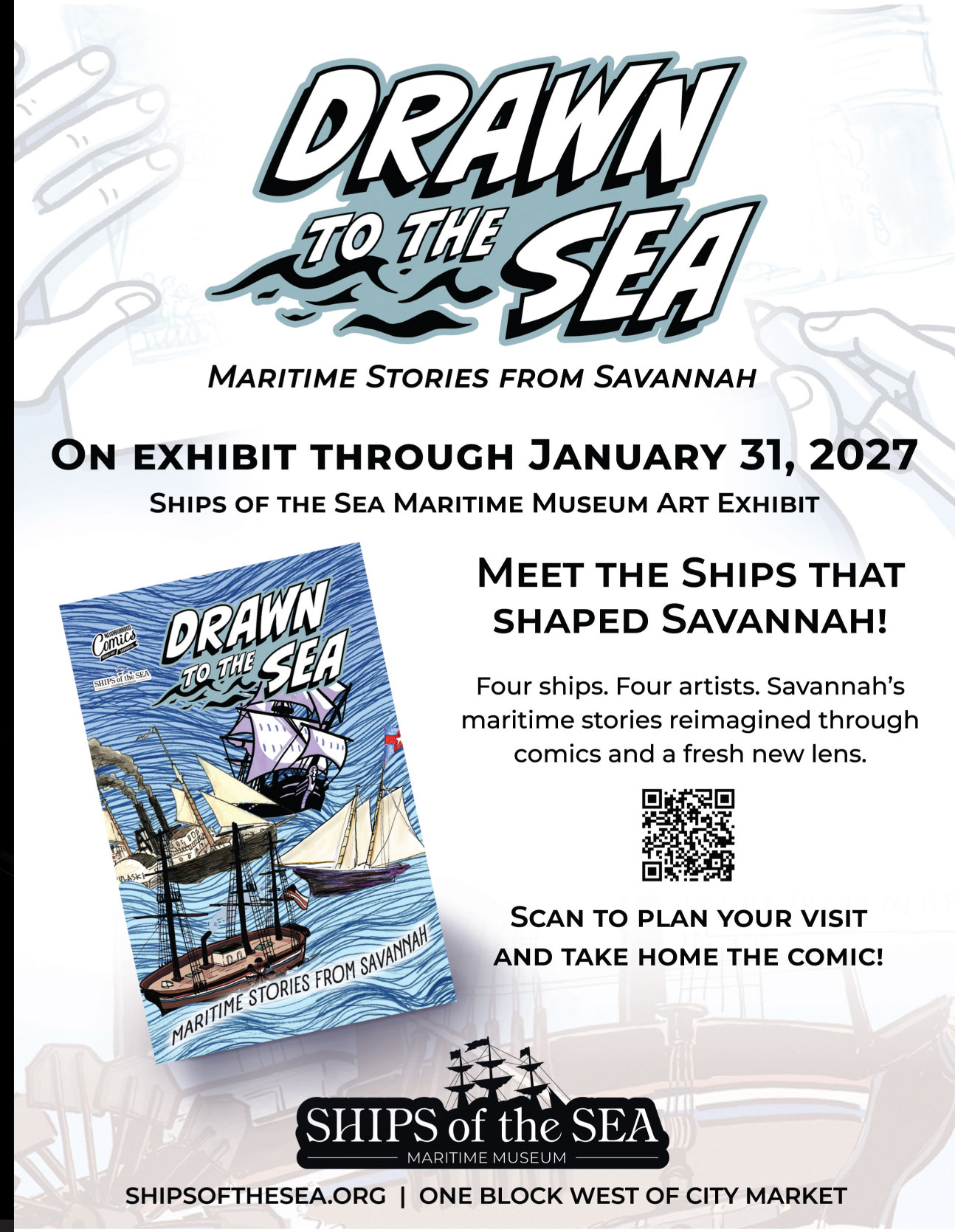
“Drawn to the Sea: Maritime Stories from Savannah” will be on view at Ships of the Sea Maritime Museum through January 31, 2027. Admission is $15 and free for museum members.

About The Author

Brett Bigelow
Related posts:
 The Cats Are in Charge
 Jim Messina plays District Live
 What to Do in Savannah, October 12 to October 18, 2026
 Lil Wayne Brings the Carter Catalog
 The Space Between Things
 THE STORY BEHIND THE STORY
 Randy’s Barbeque
 The Talented Mr. Green
 The Way She Makes You Feel
 180 Million Reasons to Look Closer
 Around Mashama’s Table
 Dear Enmarket Arena,
 Hannah Dasher Knows Exactly Where She’s From
 Building the Place People Come Back To
 Late Night Crossroads: Fancy Parker’s Market
 Meet The Baker’s: Brochu’s Family Tradition
 Peacock Lounge
 BAZAAR BY SHOPSCAD IS GIVING SAVANNAH A FRONT ROW SEAT TO SCAD TALENT
 E-Tang and the Rise of the Soup Dumpling
 Strangebird Returns
 Dear Charleston,
 America’s Umpire
 HOW SOBREMESA FOUND ITS SHAPE
 Bar Bibi at Hotel Bardo
 Black Rabbit and the Quiet Art of Staying Put
 FARM: Savannah’s Favorite Neighborhood Restaurant in Bluffton
 The Art Of Creation
 Heeler Supper Club: A Secret Table in Starland Worth Finding
 Savannah did not always see itself as a serious food city.
 The Long Way Back to the Lights
 Bread Trust and the Work of Carrying on.
 THE MARTHARITA: HOW A DRINK BECOMES FOLKLORE
 SMF the image of the Sinisa Ciric
 Fishbar: living by the fire
 My Father’s Camera
 Matt & Jane: Savannah Wants Both!
 Coffee Shop imagination
 A Day in Starland w/ Josephine Johnson
 Dibs! We Call Jingle Bells!
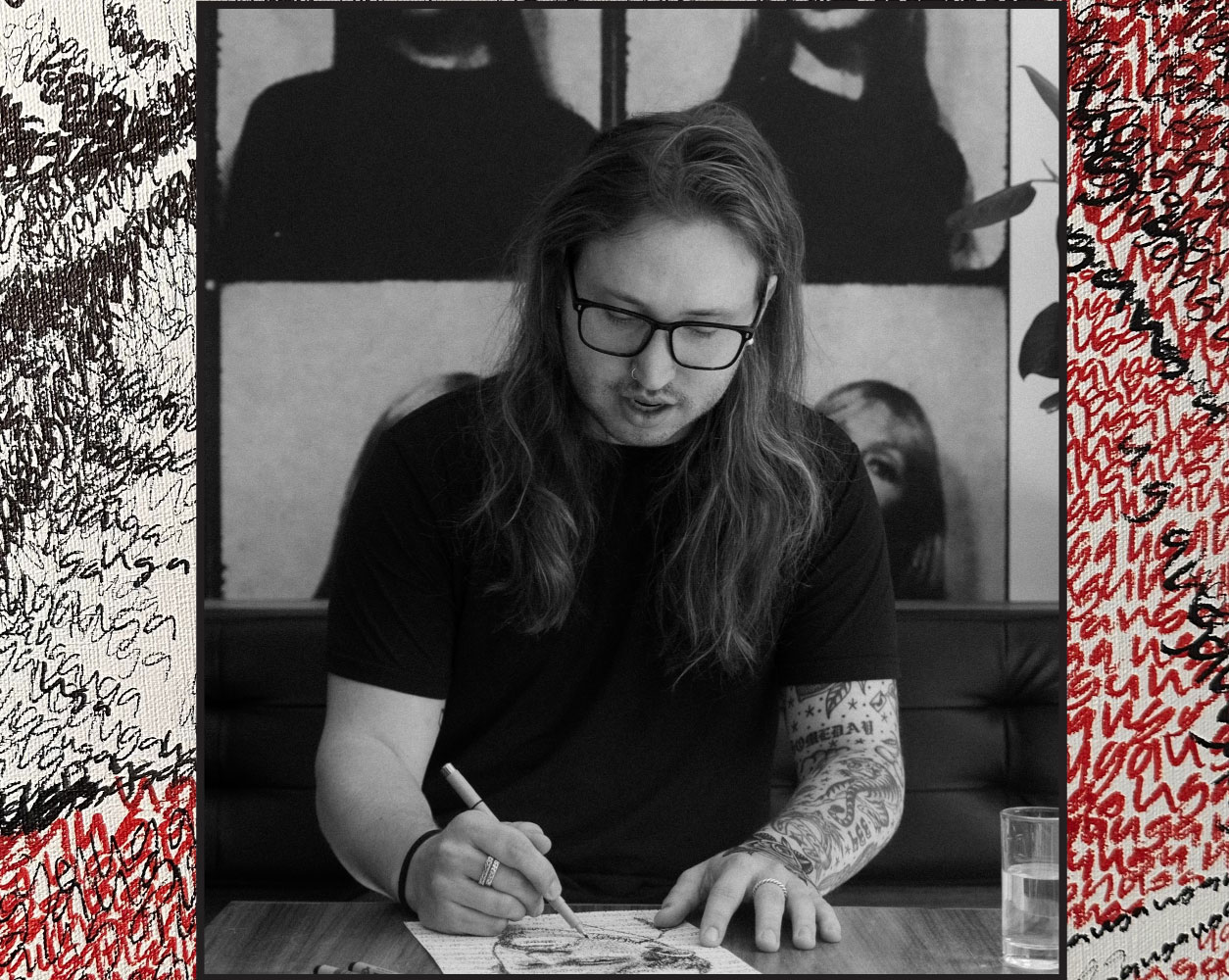 A Portrait of Persistence: The Art of Jayce Hall
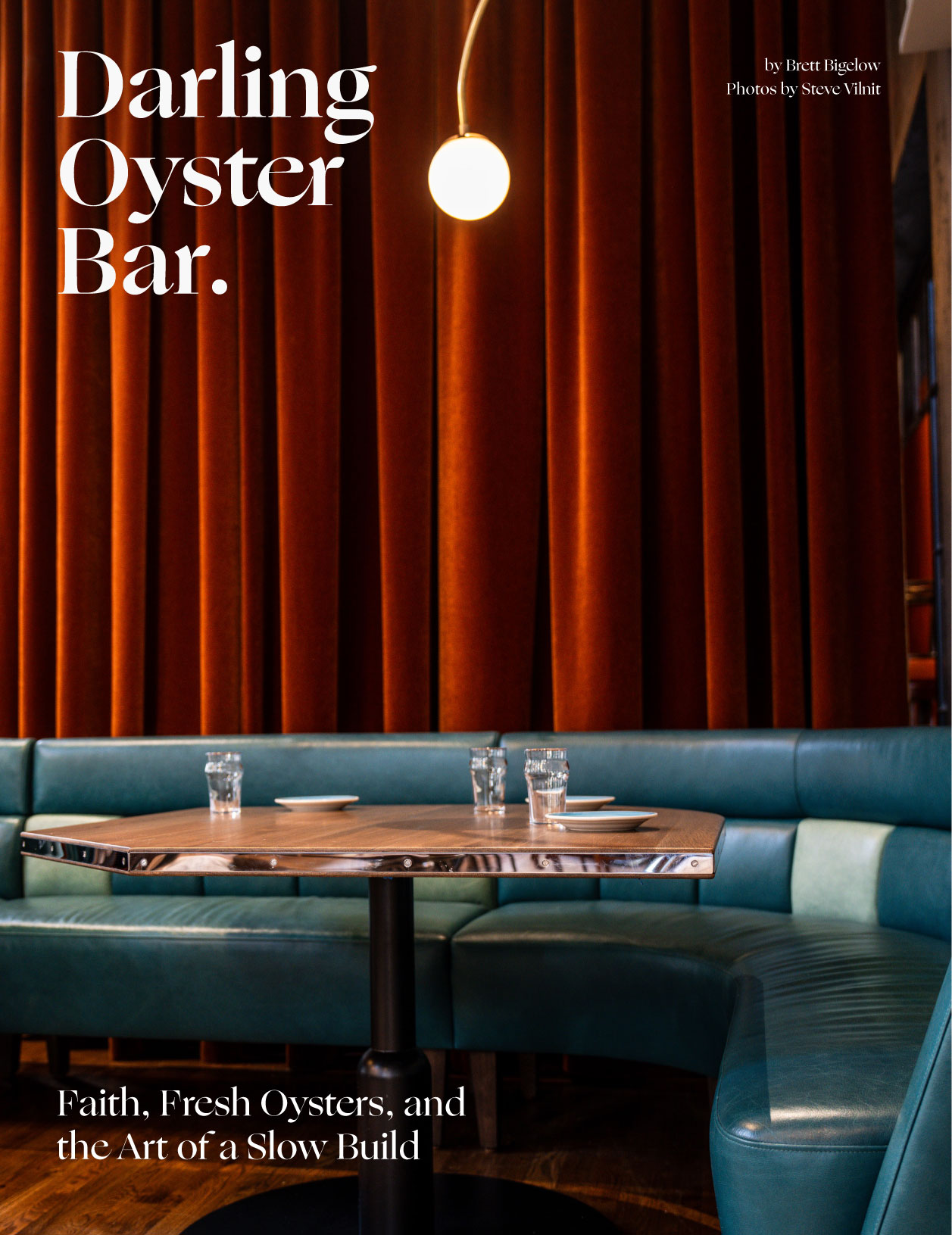 Darling Oyster Bar
 The Art of Creation
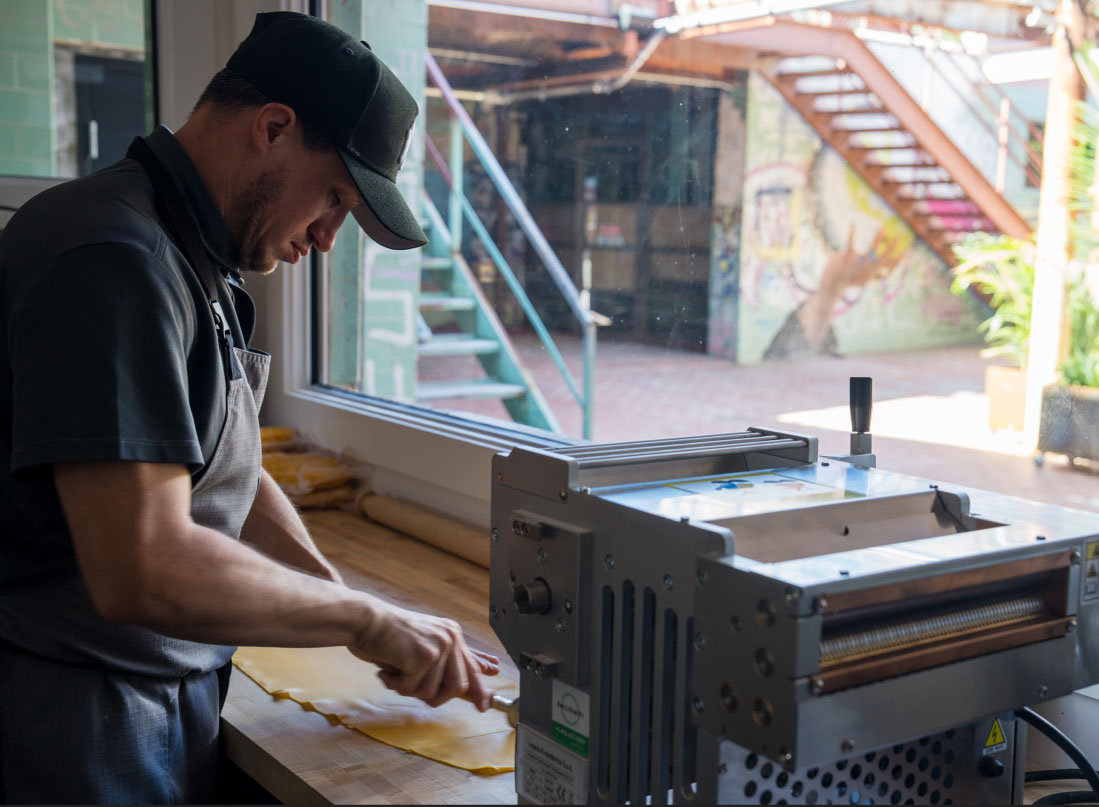 Lucia Pasta Bar & The Art of Feeling Right at Home
 Broughton Street Revival
 Untitled Bar
 The Ice Tub Club
 Salt, Soul, and Sea Wolf
 Randall Patrick
 Meet Chef Chino
 Susanna Kennedy Mesmerizing
 Savannah Photo Club: Like a community focused on love and family.
 Striking Creativity with Vintage Matchbook Art
 From Afghanistan to SCAD: Afghan Sisters Escape Taliban in ‘One Step Away.’
 Savannah Shows Up: How this new restaurant was welcomed with open arms
 Pop Up Revolution: Inside Fleeting’s ever changing table
 COMMON THREAD & Savannah’s Culinary Awakening
 Savannah’s Coolest Block
 Municipal Grand: Savannah’s New Living Room
 Why does Savannah Made Simple Magazine exist?
 SCAD Savannah Film Festival Wraps Another Incredible Year
 Savannah For Morons: The Comedy Trolley Tour That Will Have You in Stitches
 Bleak, Beautiful, and Honest: Randall Patrick’s Savannah
 After Last Call: Savannah’s Late Night Savior
 Savannah’s Culinary Revolution: Fleeting’s Guest Chef Pop-Ups
 Birria Beyond Borders: How One Spot in Savannah Became a Culinary Crossroads
 Foxtail Coffee Co. Opens in Savannah
 Beneath the Surface: How Bowl & Brew is Redefining Broughton Street entertainment
 Savannah Showed Up: How this new restaurant was welcomed with open arms
 From peaches to oysters? Georgia’s newest culinary trend.
 Brochu’s Sour Hour: Where hip, fun, and food collide
Categories: Article
Tags: , #Georgia, #Savannah GA, #Savannah Tourism, #Visit Savannah, Savannah Georgia