

Around Mashama’s Table
I told Mashama Bailey that I didn’t want a drink.
That was a lie.
It was three o’clock in the afternoon, I had yoga later that evening, and I was trying to make at least one responsible decision that day. So when one of America’s most celebrated chefs asked if I’d like a cocktail, I politely declined.
A few minutes later I was sitting around her table drinking tequila.
Trusted by 70,000+ Savannah Locals
Get the stories, restaurant discoveries, events, and insider recommendations that locals already rely on.
Honestly, there was probably never another outcome.
The setting felt almost absurd when you stopped to think about it.
Bailey had just been named to the TIME 100 list of the world’s most influential people. Not top 100 chefs, top 100 PEOPLE. She won 2022 James Beard Outstanding Chef. She had recently been recognized as North America’s Best Female Chef by The World’s 50 Best Restaurants. The Grey continues to sit among the most respected restaurants in America. Last year she expanded internationally with L’Arrêt by The Grey in Paris, bringing Southern food into one of the world’s great culinary capitals. She also became the first African American chef featured on Netflix’s Chef’s Table.
The list of accomplishments is long.
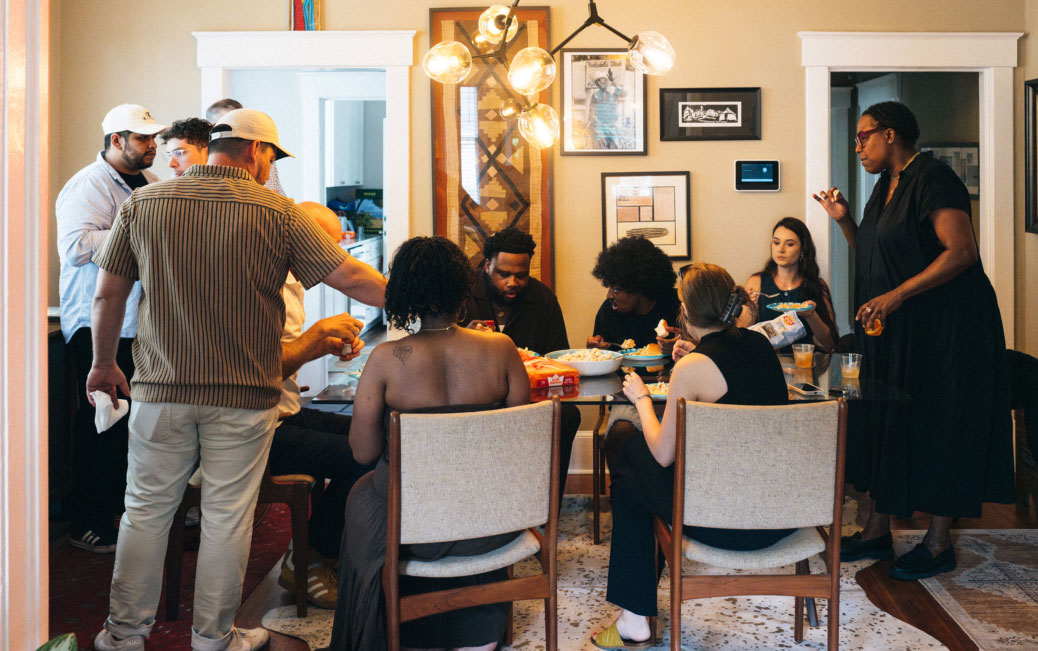
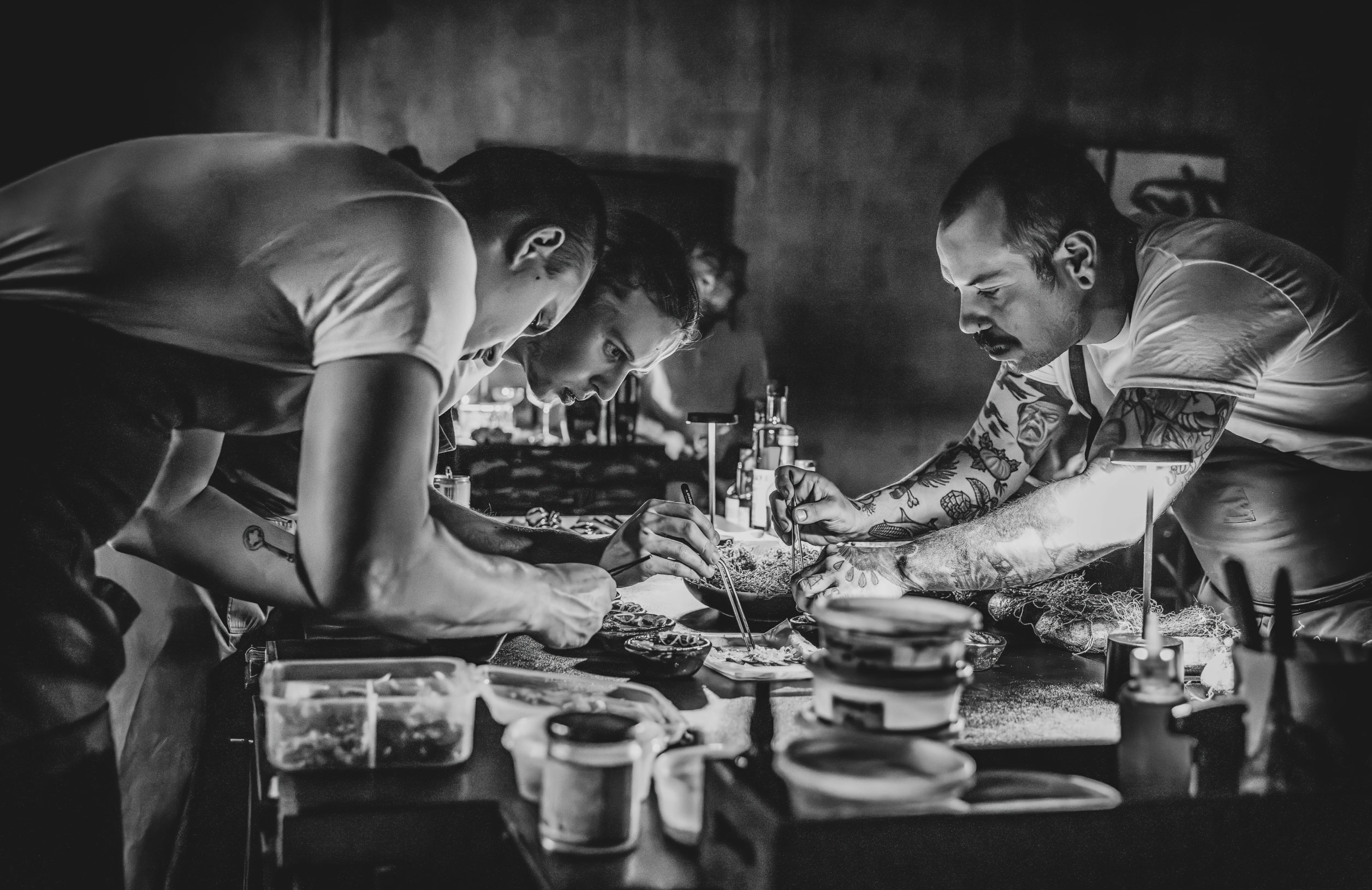
Yet here we were, not inside The Grey, not at a formal interview, but gathered around a table in her home while she cooked for her team.
And almost immediately, I understood why she had insisted they be there.
A few weeks earlier, while discussing Southern food and the future of The Grey, Bailey had stopped me.
A chef doesn’t work alone.
If we were going to talk about where The Grey is headed, she wanted the people helping shape that future sitting at the table too.
So they came.
What followed felt less like an interview and more like the kind of conversation Savannah has always done best. Food on the table. Stories bouncing from one person to another. A little history. A little gossip. A lot of laughter.
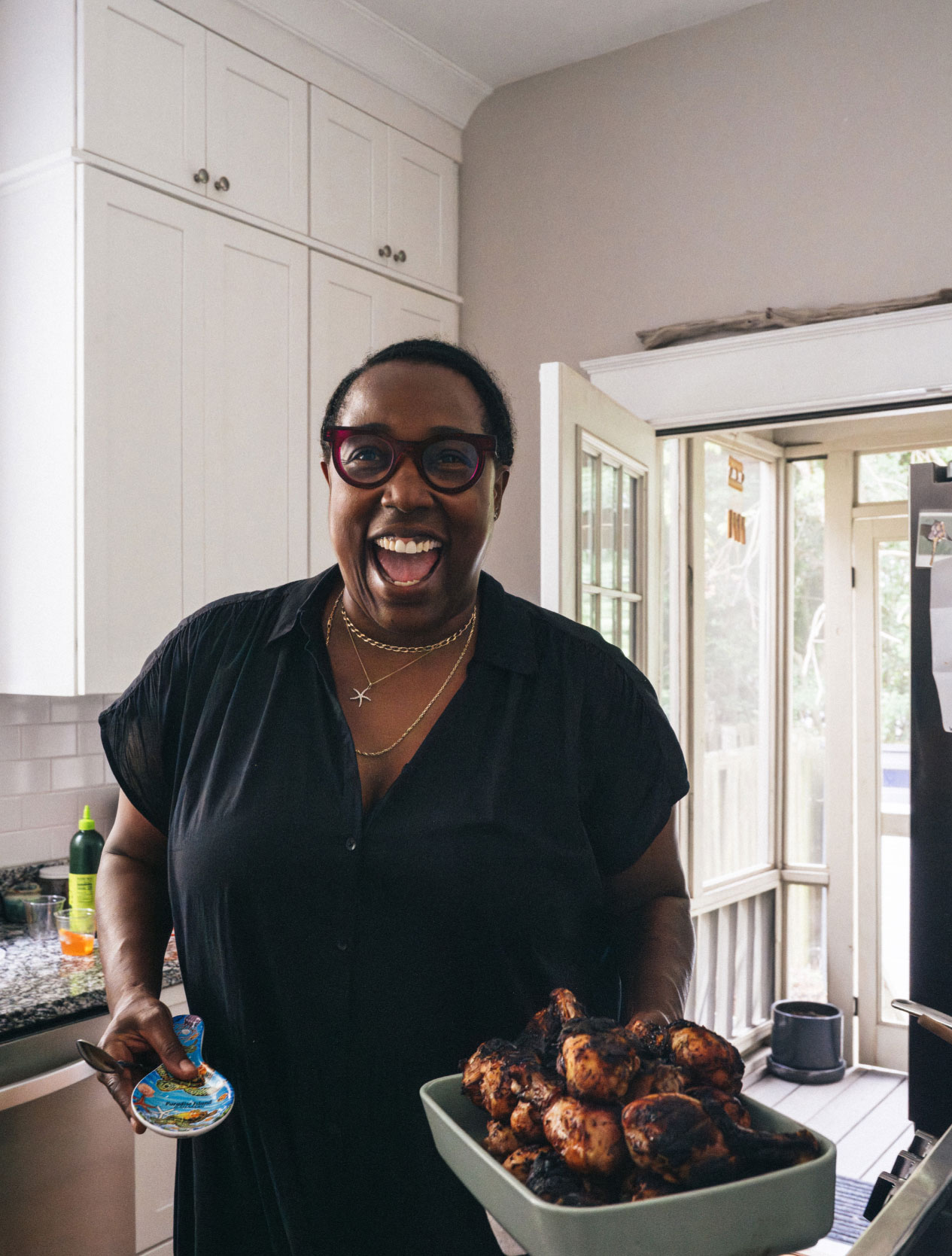
Meanwhile Bailey kept cooking.
The menu wasn’t designed to impress anyone.It was designed to mean something.
At one point she carried over a seafood salad based on a recipe from her grandmother.
“This is my grandmother’s seafood salad recipe,” Bailey explained. “She uses imitation crab meat, elbow macaroni, bell pepper, onion, lemon, mayonnaise and a shit ton of dill.”
The room laughed.
Bailey had elevated the dish with shrimp and real crab meat, but one ingredient remained non–negotiable.
“You gotta have the imitation crab meat for the nostalgia.”
That sentence may explain Bailey’s cooking as well as anything she’s ever said.
For all the awards and accolades, her food remains deeply tied to memory. Not nostalgia for nostalgia’s sake, but food as a living record of the people who came before.
Later, when I asked what interested her most right now as a chef, her answer came immediately.
“Southern ingredients.” No hesitation.
“Southern ingredients are what really, really interests me right now, and the more local, the better.”
Then she expanded on the idea.
“I’m really interested in Southern food. I’m really interested in cooking it the same way my grandmother cooked it, but elevating it in the way that we’ve been doing at The Grey for like the last 12 years.”
For a chef whose career now stretches from Savannah to Paris, it was a surprisingly grounded answer. After reaching the highest levels of her profession, Bailey’s attention seems to be turning even more intensely toward the South itself.
As plates were passed around, the conversation drifted toward Southern food. Not Southern food as most Americans think about it.
Not fried chicken. Not biscuits. Not the version reduced to clichés and tourist brochures. Bailey’s interest runs much deeper.
Earlier in our conversation she had talked about the evolution of The Grey’s menu and the role former collaborators played in helping refine it.
“I think it’s important for people to understand that a chef doesn’t work alone,” she said. “It takes a team to build a menu. It takes a team to build out a restaurant.”
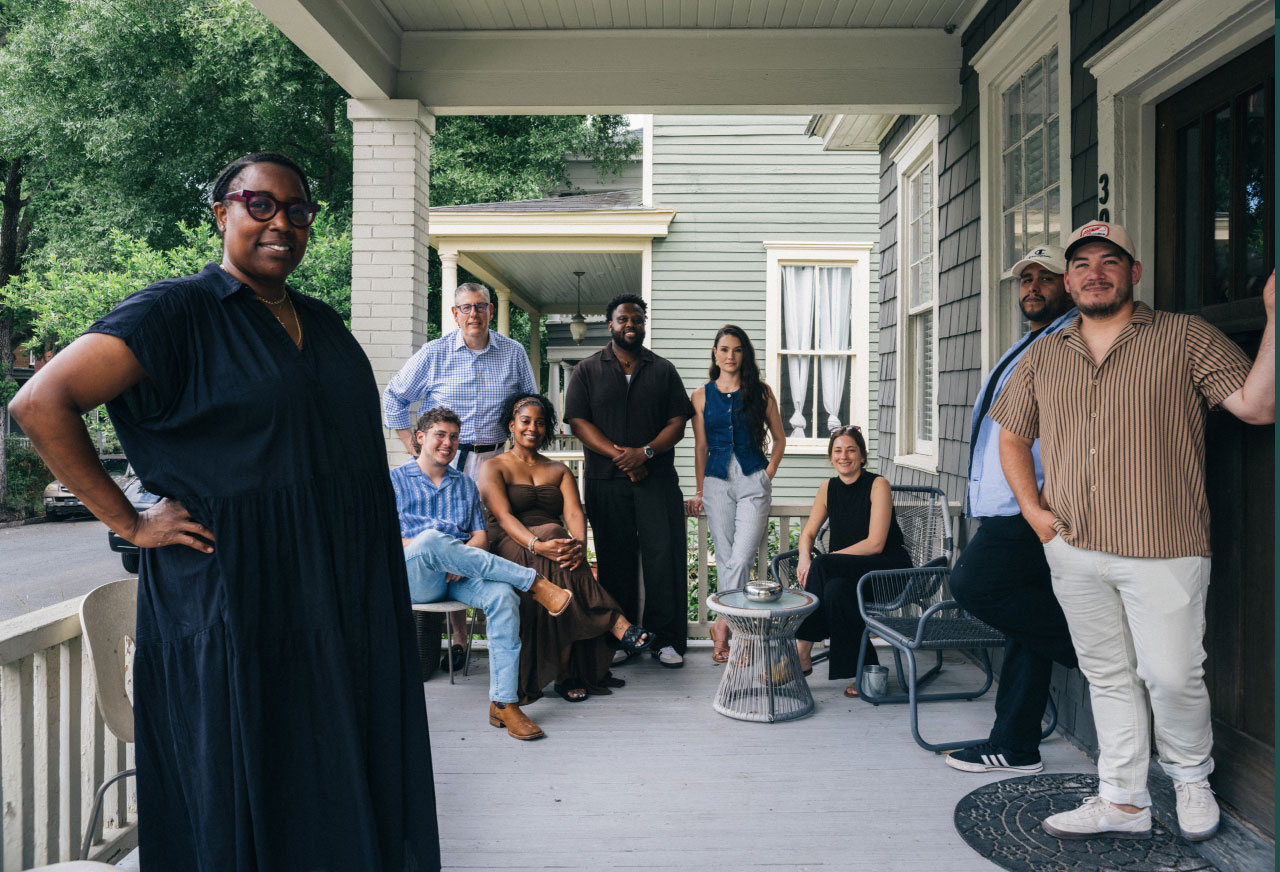
That philosophy sat right there around the table.
The restaurant wasn’t represented by one person. It was represented by a collection of voices, backgrounds, experiences, and ideas.
One of those voices is a young junior sous chef named Menchamo “Mo” Drislane, whose story alone could fill an entire article, and may have had the most unexpected story.
Born in Ethiopia, adopted by American parents, raised partly in Massachusetts and partly in Asia, he found his way into one of Savannah’s most celebrated kitchens through a route nobody could have predicted.
His parents adopted his sister from Kazakhstan before adopting him from Ethiopia. The family later lived in Hong Kong and other parts of China.
Today he spends his days helping prepare Southern food at The Grey.
When I asked what type of restaurant he might someday open himself, the answer came quickly.
“Ethiopian food, for sure.”
The response immediately connected to the larger discussion unfolding around the table.
Everyone seemed to understand that food carries identity. Food carries culture. Food carries stories.
The challenge is keeping those stories alive.
The conversation shifted again when Bailey brought up one of her favorite ingredients.
The discussion landed on midlings rice. For many diners, it’s just rice. For Bailey, it’s history.
“The significance of that is the fact that during slavery, when Black folks were enslaved, they were given the broken bits and you would sell the whole grain rice,” Bailey explained.
At The Grey, those broken grains become something elevated. The ingredient remains humble. The technique does not.
That balance sits at the heart of Bailey’s vision for Southern food. She isn’t interested in turning Southern cooking into fine dining theater. She is interested in revealing the value that was always there.
The conversation grew more personal as Bailey began talking about her family.
Her grandmother was born in New York after family members left Georgia. Some of that history remains difficult to trace because records simply disappeared.
“They burned down a lot of shit back then,” someone observed. Bailey nodded.
“The courthouse was burned down.” Land records vanished. Family records vanished. Official history vanished. But the stories survived.
The stories survived because people kept telling them.
That realization led the conversation toward Gullah Geechee culture, oral history, and the traditions that continue shaping Southern food today.
Bailey admitted that when she first arrived in Savannah she didn’t fully understand the depth of the culture surrounding her.
Over time, local elders and historians introduced her to stories about rice cultivation, seafood traditions, and the communities that built much of the region’s food culture.
The more she learned, the more she realized how much remains undocumented.
“So much of it is oral,” Bailey said. One generation tells the next. A grandmother tells a granddaughter. An uncle tells a nephew. A recipe gets passed along.
A story gets repeated. A piece of history survives. Or it doesn’t.
“It’s more important now than ever to talk about Southern Black food,” Bailey said.
The reason is simple.
The people carrying that knowledge are aging. If their stories disappear, entire chapters of Southern history disappear with them.
The discussion challenged many assumptions people have about Southern cuisine. Everything connects to a bigger narrative.Everything comes from somewhere.
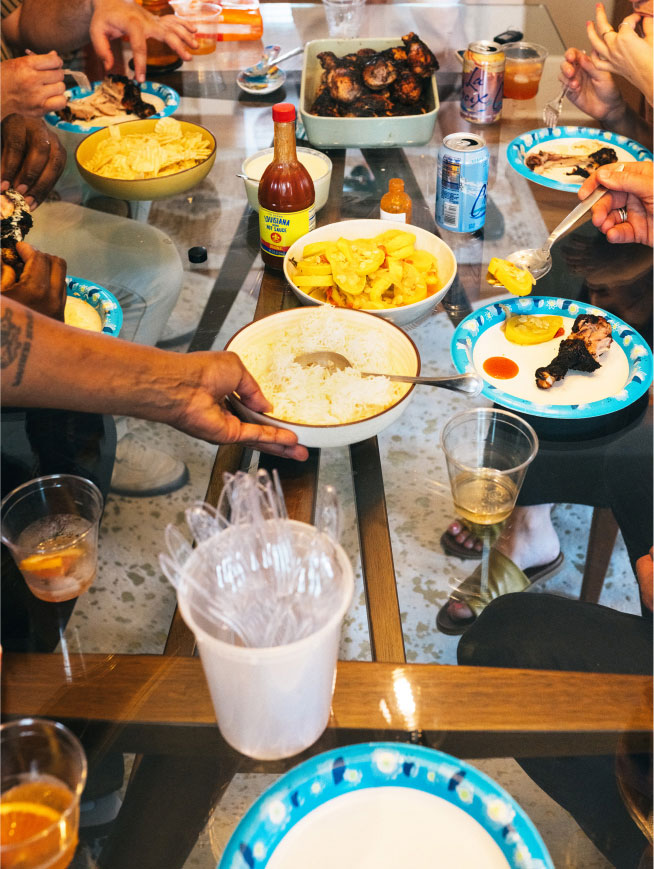
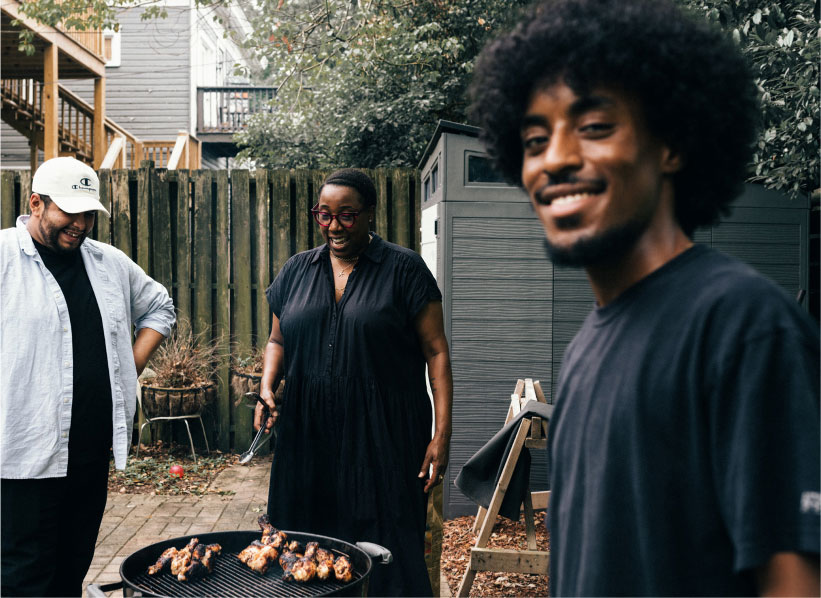
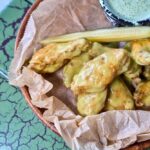
As the afternoon continued, the food kept arriving. There was grilled chicken. Squash. Seafood salad. Hot sauce from a local farmers market vendor that quickly became the center of another discussion.
The conversation moved effortlessly between serious topics and complete nonsense. Someone discussed natural wine. Someone else talked about tequila. There were stories about restaurants, Savannah development, SCAD students, family meals, and neighborhood changes.
The room felt less like a gathering of industry professionals and more like a family reunion that happened to include one of America’s most celebrated chefs.
That may be why Bailey wanted everyone there. The article wasn’t supposed to be about her. Not entirely.
The afternoon revealed that The Grey is not the product of one person’s vision. It is the product of many people carrying ideas forward together.
Every story connected to another. Every person added something.
Near the end of the afternoon, I asked Bailey who someone should talk to if they wanted to better understand Gullah Geechee food culture.
Her answer wasn’t a specific recipe. It wasn’t a specific dish. It wasn’t even a specific restaurant. It was people.
“The best way to learn is to sit at a table and get to know people.”
For a moment, everything else disappeared. The awards. The headlines. The national recognition. The celebrity. All of it.
What remained was a table full of food and stories.
A grandmother’s seafood salad. A chef trying to preserve history. A team helping bring that vision to life.
The world is celebrating Mashama Bailey right now. And rightly so.
But sitting around that table, listening to her talk about Southern ingredients, African American foodways, Savannah’s culinary future, and the way her grandmother cooked, it became clear that the awards are not really the story.
The story is what she plans to do with the platform those awards have given her.
The story is that after traveling the world and reaching the highest levels of her profession, Mashama Bailey is becoming even more interested in the things that were right in front of her all along.
The food. The people. The city.
And the stories…still waiting to be told around Mashama’s table.
By Brett Bigelow || Photos by Alejandro, Olaya Torres
About The Author
Brett Bigelow
Related posts:
 The Cats Are in Charge
 Jim Messina plays District Live
 What to Do in Savannah, October 12 to October 18, 2026
 Drawn to the Sea
 Lil Wayne Brings the Carter Catalog
 The Space Between Things
 THE STORY BEHIND THE STORY
 Randy’s Barbeque
 The Talented Mr. Green
 The Way She Makes You Feel
 180 Million Reasons to Look Closer
 Dear Enmarket Arena,
 Hannah Dasher Knows Exactly Where She’s From
 Building the Place People Come Back To
 Late Night Crossroads: Fancy Parker’s Market
 Meet The Baker’s: Brochu’s Family Tradition
 Peacock Lounge
 BAZAAR BY SHOPSCAD IS GIVING SAVANNAH A FRONT ROW SEAT TO SCAD TALENT
 E-Tang and the Rise of the Soup Dumpling
 Strangebird Returns
 Dear Charleston,
 America’s Umpire
 HOW SOBREMESA FOUND ITS SHAPE
 Bar Bibi at Hotel Bardo
 Black Rabbit and the Quiet Art of Staying Put
 FARM: Savannah’s Favorite Neighborhood Restaurant in Bluffton
 The Art Of Creation
 Heeler Supper Club: A Secret Table in Starland Worth Finding
 Savannah did not always see itself as a serious food city.
 The Long Way Back to the Lights
 Bread Trust and the Work of Carrying on.
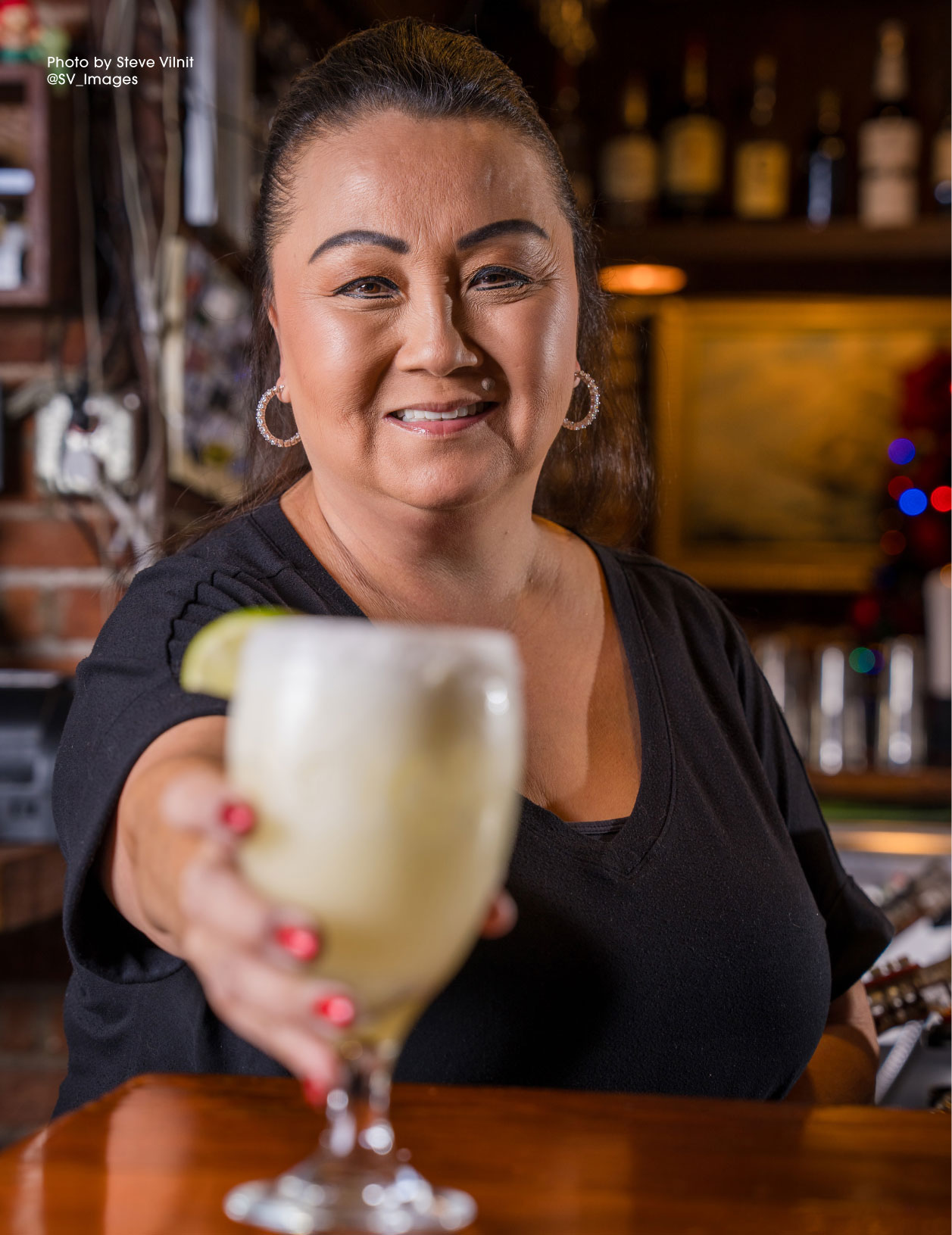 THE MARTHARITA: HOW A DRINK BECOMES FOLKLORE
 SMF the image of the Sinisa Ciric
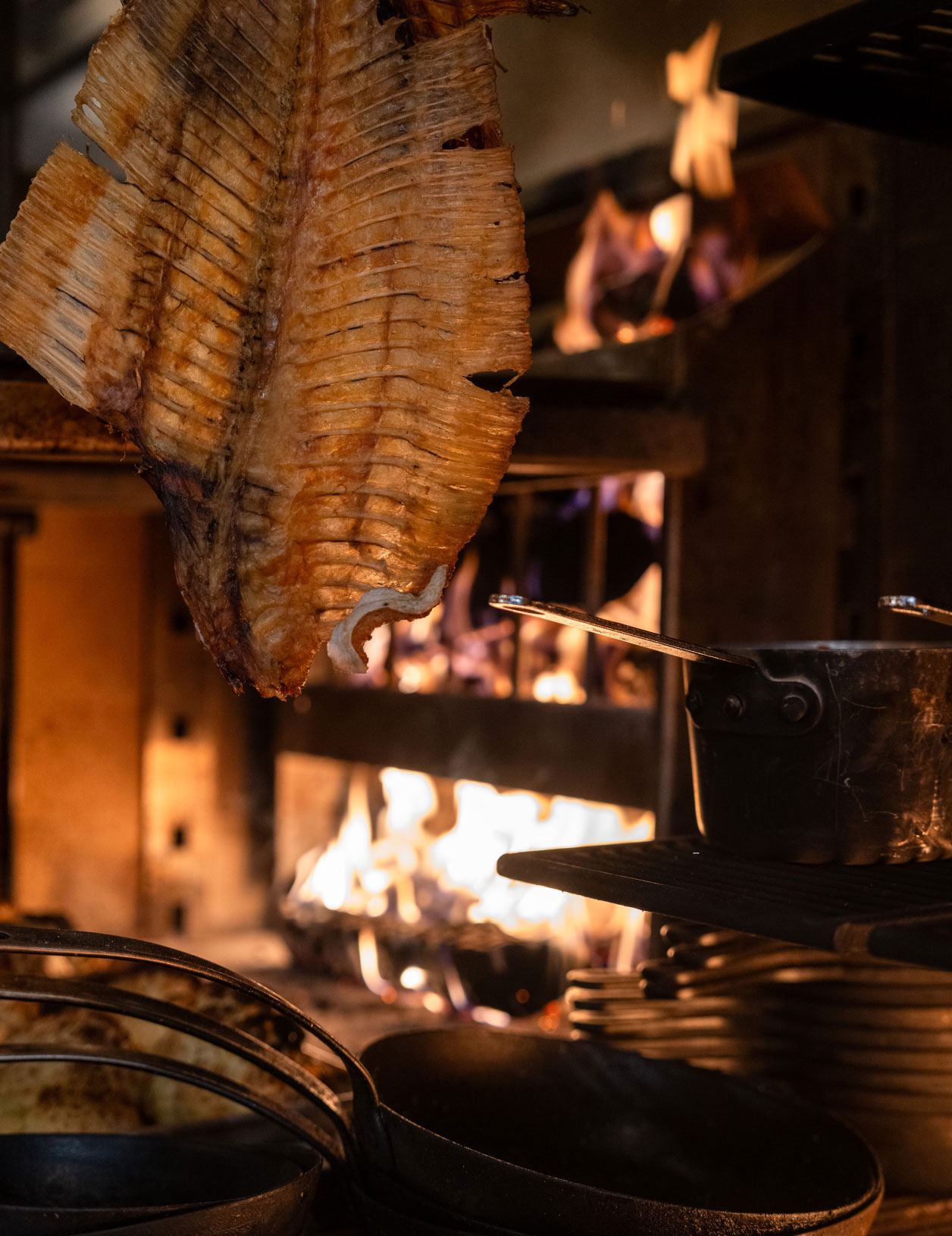 Fishbar: living by the fire
 My Father’s Camera
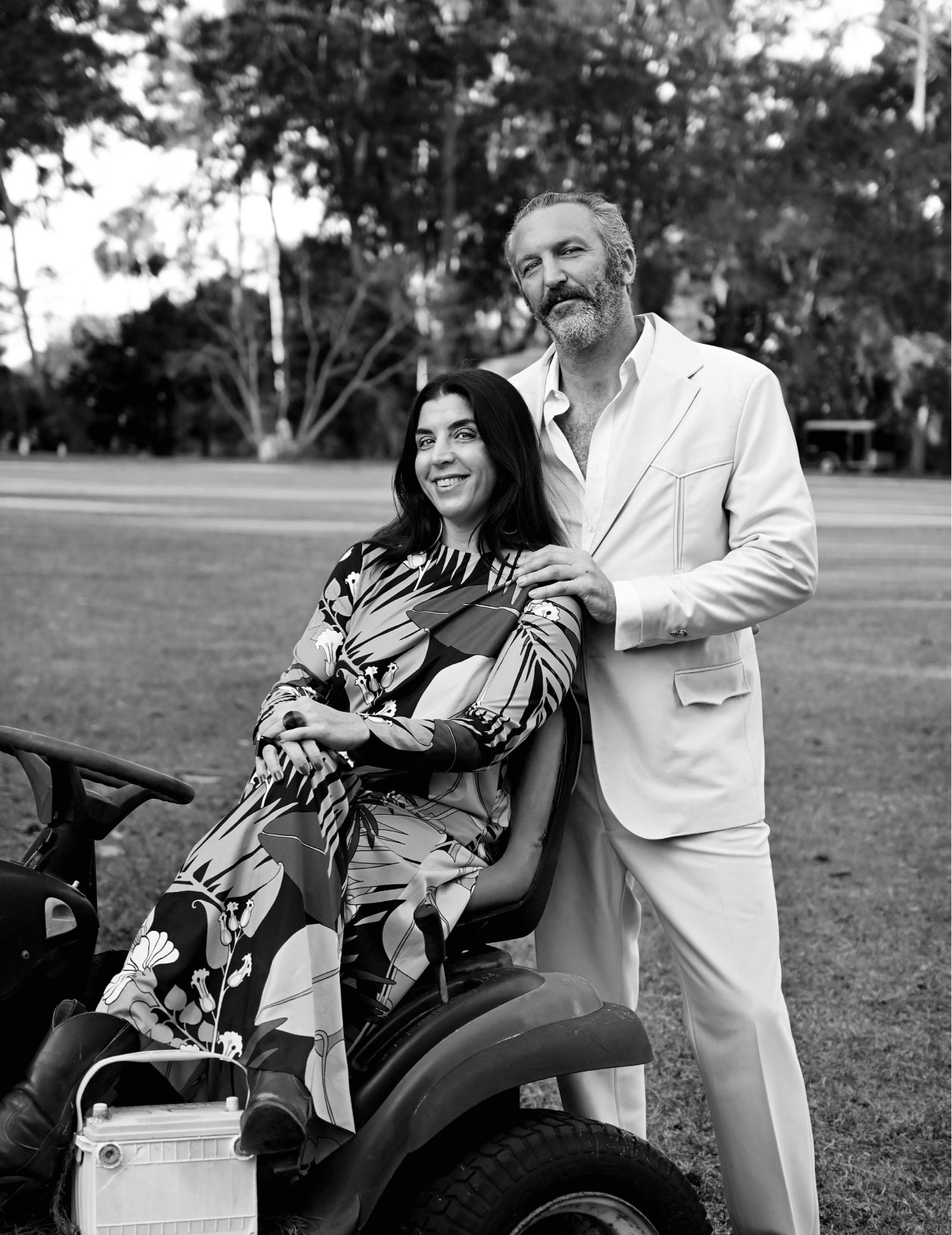 Matt & Jane: Savannah Wants Both!
 Coffee Shop imagination
 A Day in Starland w/ Josephine Johnson
 Dibs! We Call Jingle Bells!
 A Portrait of Persistence: The Art of Jayce Hall
 Darling Oyster Bar
 The Art of Creation
 Lucia Pasta Bar & The Art of Feeling Right at Home
 Broughton Street Revival
 Untitled Bar
 The Ice Tub Club
 Salt, Soul, and Sea Wolf
 Randall Patrick
 Meet Chef Chino
 Susanna Kennedy Mesmerizing
 Savannah Photo Club: Like a community focused on love and family.
 Striking Creativity with Vintage Matchbook Art
 From Afghanistan to SCAD: Afghan Sisters Escape Taliban in ‘One Step Away.’
 Savannah Shows Up: How this new restaurant was welcomed with open arms
 Pop Up Revolution: Inside Fleeting’s ever changing table
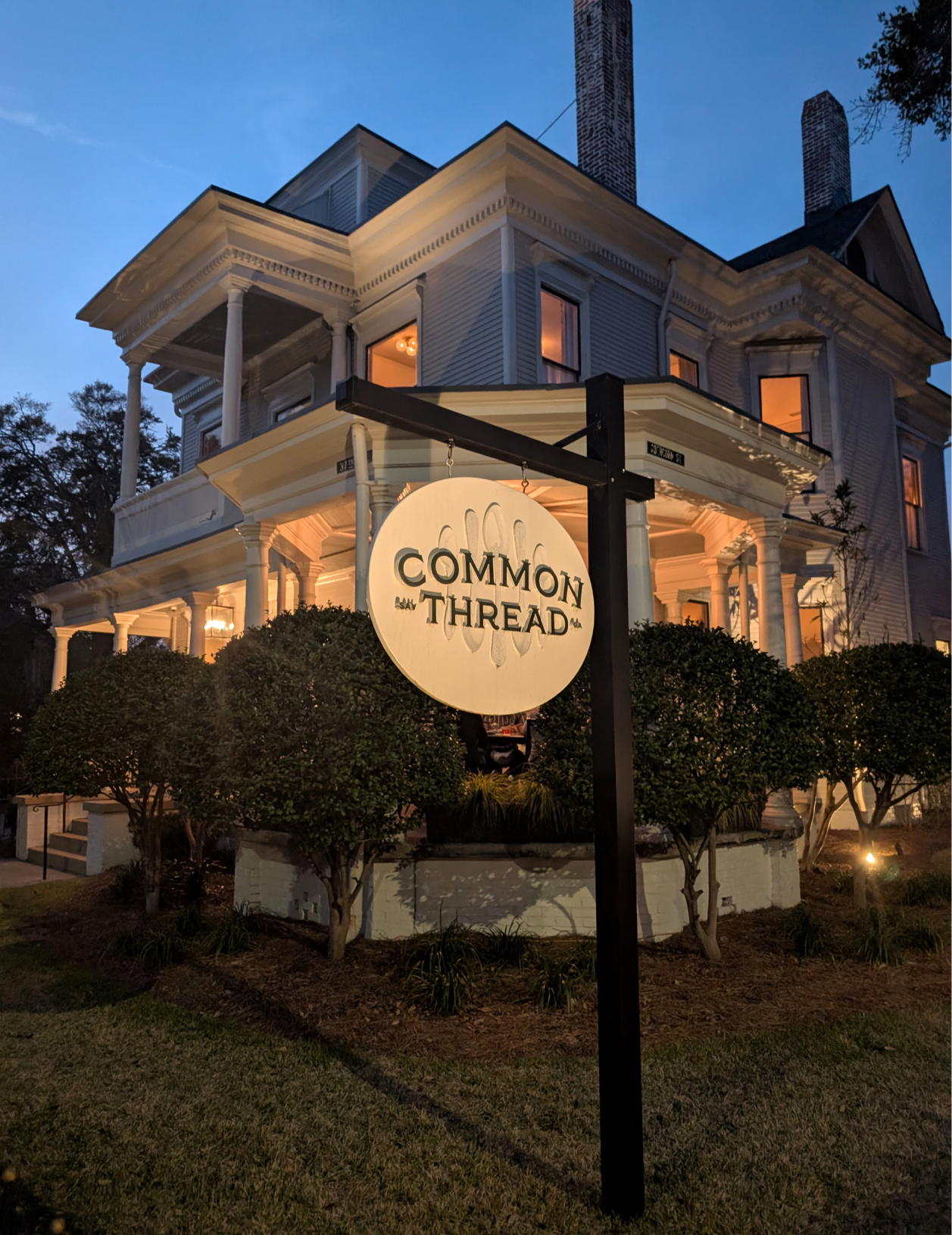 COMMON THREAD & Savannah’s Culinary Awakening
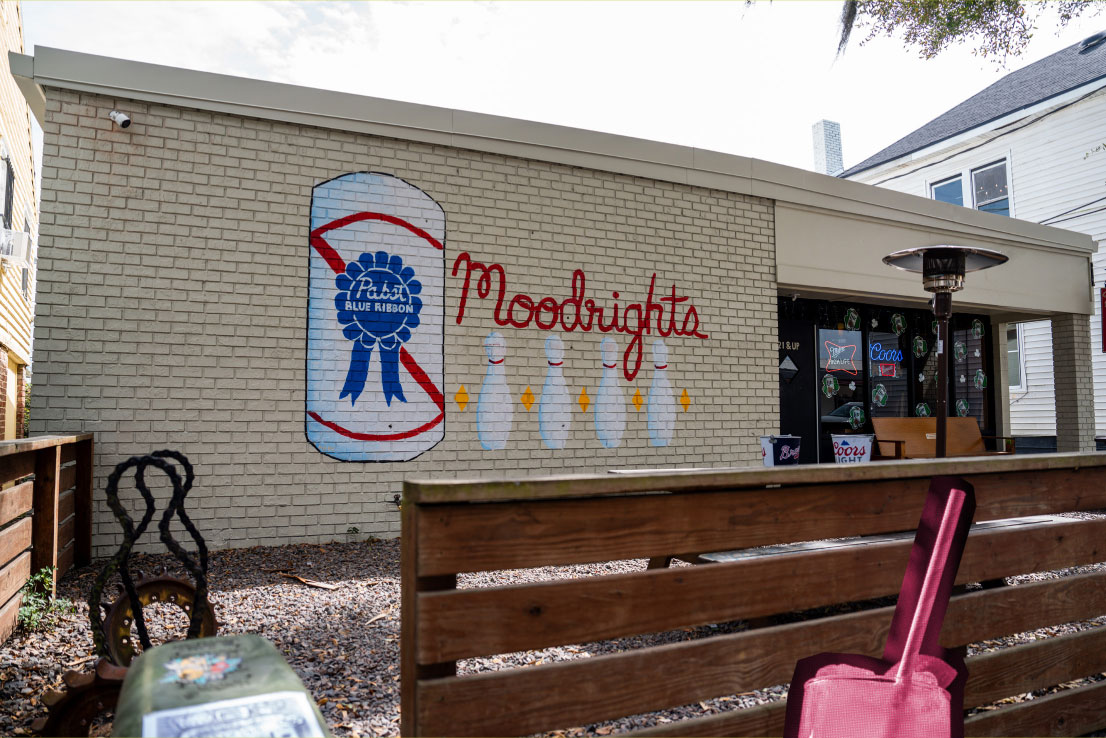 Savannah’s Coolest Block
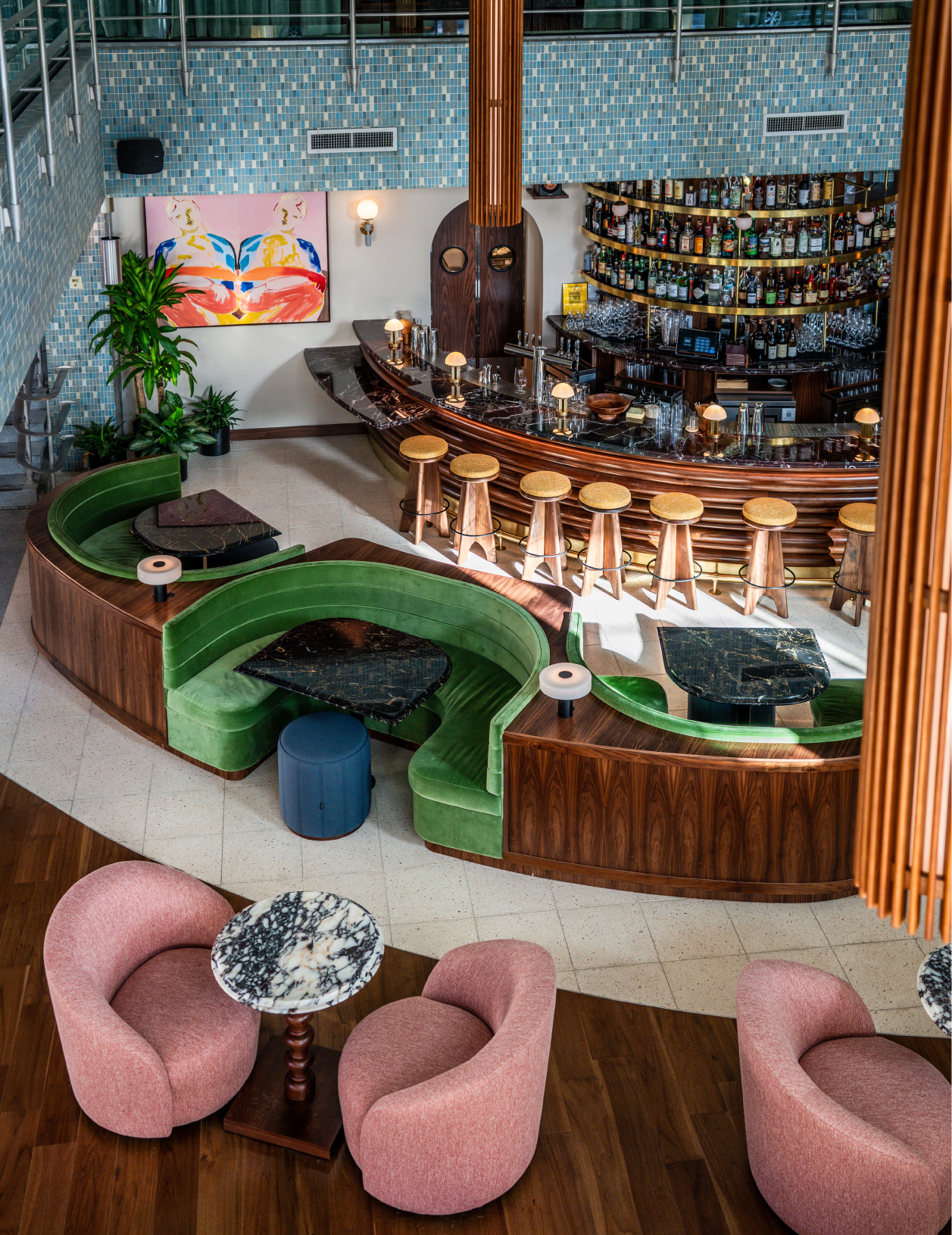 Municipal Grand: Savannah’s New Living Room
 Why does Savannah Made Simple Magazine exist?
 SCAD Savannah Film Festival Wraps Another Incredible Year
 Savannah For Morons: The Comedy Trolley Tour That Will Have You in Stitches
 Bleak, Beautiful, and Honest: Randall Patrick’s Savannah
 After Last Call: Savannah’s Late Night Savior
 Savannah’s Culinary Revolution: Fleeting’s Guest Chef Pop-Ups
 Birria Beyond Borders: How One Spot in Savannah Became a Culinary Crossroads
 Foxtail Coffee Co. Opens in Savannah
 Beneath the Surface: How Bowl & Brew is Redefining Broughton Street entertainment
 Savannah Showed Up: How this new restaurant was welcomed with open arms
 From peaches to oysters? Georgia’s newest culinary trend.
 Brochu’s Sour Hour: Where hip, fun, and food collide
Categories: Article
Tags: , #Georgia, #Savannah GA, #Savannah Tourism, #Visit Savannah, Savannah, Savannah Georgia