Steep Canyon Rangers Come to Their Sister City, Savannah
There is something about Savannah that feels familiar to Barrett Smith.
Smith, long time Steep Canyon Rangers bass player, has spent most of his adult life in Asheville, North Carolina, home base for Steep Canyon Rangers and one of the South’s great live music cities. Asheville and Savannah do not look much alike. One sits in the mountains, the other along the coast. But when Smith talks about the two cities, geography quickly becomes the least interesting part of the comparison.
“When I think of Asheville and Savannah, I’m like, yeah, these are two small cities that pack a really big cultural punch,” Smith says. “They’re these kind of cultural gems of the Southeast.”
Trusted by 70,000+ Savannah Locals
Get the stories, restaurant discoveries, events, and insider recommendations that locals already rely on.
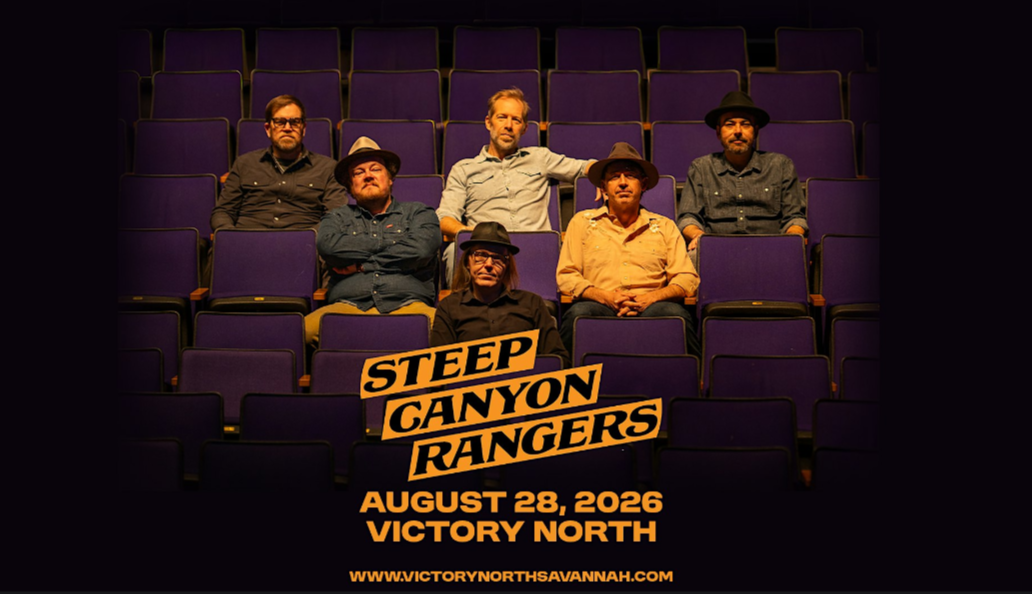
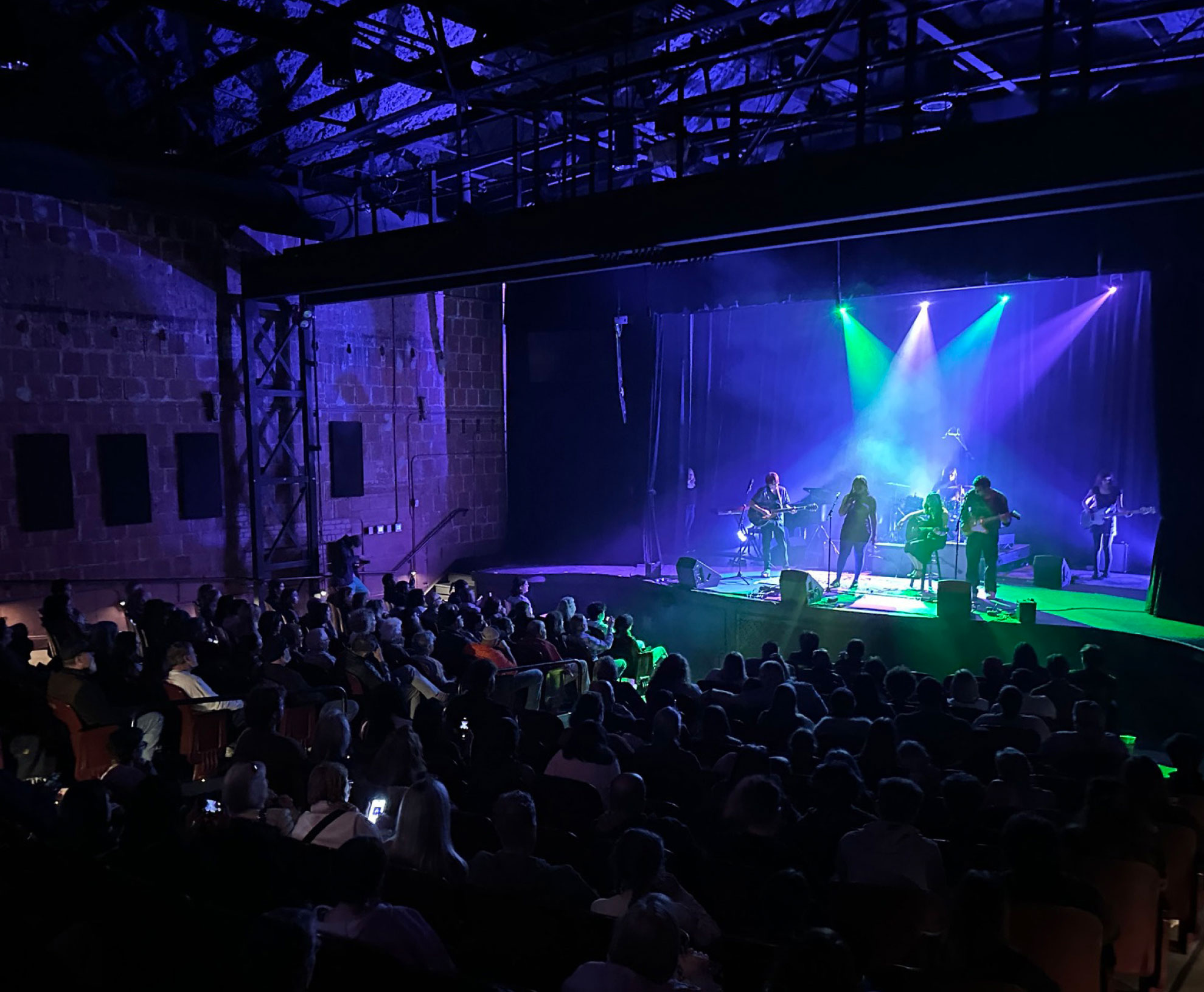
Steep Canyon Rangers return to Savannah on August 28 for a show at Victory North, bringing one of America’s most accomplished bluegrass bands back to a city Smith sees almost as a cultural relative of Asheville. The band has played Savannah before, and Smith says arriving here feels different from simply rolling into another stop on a tour.
“When we, as a band from Asheville, come down to Savannah, it feels like we’re these ambassadors from this other mountain clan art place,” he says. “And just walking around Savannah, it’s like, oh wow, yeah, this place, like Asheville, this place has a lot to give. It’s so beautiful and weird and wonderful.”
Weird is meant as a compliment.
Asheville has spent decades cultivating a reputation as a place where artists, musicians, outsiders and interesting people can find a little room to breathe. Smith points to Black Mountain College and the area’s long creative history. Savannah has its own version of that story, built through centuries as a port city and continually replenished by artists and students arriving from around the world.
“Savannah, to an Asheville person, as soon as I hop off the bus, it immediately kind of punches me in the face,” he says. “It just has that energy to it, which I really like a lot.”
That energy matters to Steep Canyon Rangers because the band does not simply arrive with a predetermined show and press play. They get to Savannah early in the morning, and whenever the schedule allows, they walk around. They eat. They look around. They absorb some of the place.
That eventually works its way onto the stage.
“We’re all kind of thinking, what kind of show is this going to be tonight?” Smith says. “What’s the set list going to be like? Really, what is the instrumentation going to be like? Because we switch instruments and do different things a lot.”
The next night somewhere else might be completely different.
“It’s nice to land in Savannah and spend the whole day just kind of percolating and developing some impression of, like, this is the kind of show that should happen tonight in Savannah,” he says. “We take a lot of pride in tailor making each night. Each night is unique.”
Victory North is particularly suited for that kind of show. Smith already knows the room.
“We like Victory North,” he says.
But our conversation eventually moved beyond the Rangers’ show and into a bigger question that Savannah has been wrestling with for years. The city has the artists. It has SCAD. It has the bars, restaurants and neighborhoods. It now has a growing collection of venues. So what would it take for Savannah to become the kind of live music city Asheville has become?
Smith has watched that process happen.
“One thing you don’t have any control over necessarily is just getting really great musicians to move to your city for some reason and create this critical mass,” he says.
That is part of it, but only part.
Smith believes a city also has to decide that live music matters, then make that idea visible enough that it becomes part of everyday life. He points to Austin as the obvious example, a place where a musical identity eventually became part of the city’s identity.
“There’s kind of a marketing element to it,” he says. “If you look at Austin, it seems to work if it’s sincere. The powers that be in the municipal system started saying, ‘Hey, this would help our city if we really leaned into this because it’s a thing we really have.’ Asheville’s done that a little bit. I could see that for Savannah.”
The key words are “if it’s sincere.”
You cannot manufacture a music culture with a slogan. You need musicians playing somewhere on Tuesday night. You need rooms that care about sound. You need promoters willing to take chances. Most importantly, you need people to develop the habit of wondering who is playing before deciding where they are going.
“Whatever it takes to get this identity where people are like, ‘I’m going out tonight. Where am I going to go? Who’s playing where?'” Smith says. “Is that a major player in my decision here? Am I looking at the bars and the restaurants and the clubs and really considering who’s playing where?”
That is how Asheville works for him.
“If I’m going to go out on a Friday night, which I don’t get to do very much, I pick up our little local magazine and look at Friday, October whatever, who’s playing where? That’s my first stop,” he says. “And that’s true of a lot of people in Asheville. Whatever it takes to get that attitude and that habit going.”
Savannah is getting closer. Victory North is part of it. New venues are part of it. Bigger acts coming through town are part of it. But Smith’s point is that a real music city is not ultimately built by one arena, one amphitheater or one great concert. It happens when going to hear live music becomes something people simply do.
And he believes Savannah already possesses the difficult part.
“Savannah’s perfectly set up for it,” Smith says. “We want in. This is like a Southeastern sister city to us, and we want Savannah to be a great live music city.”
There is something especially compelling about hearing that from someone coming from Asheville. Savannah does not need to become Asheville, Austin, Nashville or anywhere else. The foundation here is already too interesting for imitation.
As Smith puts it, “You’re not working on a blank canvas here. It’s already like the landscape has been painted. It has flavor and character to no end.”
Then he offers what may be the simplest five year plan for Savannah music imaginable.
“Draw a little music venue in there, put some energy into it. Surely it’ll work.”
On August 28, Steep Canyon Rangers get their chance to add a little more energy themselves.
Steep Canyon Rangers
Victory North
Friday, August 28, 2026
8 p.m.
About The Author
Brett Bigelow
Related posts:
 What to Do in Savannah, August 24 to August 30, 2026
 Around Mashama’s Table
 Dear Enmarket Arena,
 Hannah Dasher Knows Exactly Where She’s From
 Building the Place People Come Back To
 Late Night Crossroads: Fancy Parker’s Market
 Meet The Baker’s: Brochu’s Family Tradition
 Peacock Lounge
 BAZAAR BY SHOPSCAD IS GIVING SAVANNAH A FRONT ROW SEAT TO SCAD TALENT
 E-Tang and the Rise of the Soup Dumpling
 Strangebird Returns
Dear Charleston,
Strangebird Returns
Dear Charleston,
 America’s Umpire
 HOW SOBREMESA FOUND ITS SHAPE
 Bar Bibi at Hotel Bardo
 Black Rabbit and the Quiet Art of Staying Put
 FARM: Savannah’s Favorite Neighborhood Restaurant in Bluffton
 The Art Of Creation
 Heeler Supper Club: A Secret Table in Starland Worth Finding
 Savannah did not always see itself as a serious food city.
 The Long Way Back to the Lights
 Bread Trust and the Work of Carrying on.
 THE MARTHARITA: HOW A DRINK BECOMES FOLKLORE
 SMF the image of the Sinisa Ciric
 Fishbar: living by the fire
 My Father’s Camera
 Matt & Jane: Savannah Wants Both!
 Coffee Shop imagination
 A Day in Starland w/ Josephine Johnson
 Dibs! We Call Jingle Bells!
 A Portrait of Persistence: The Art of Jayce Hall
 Darling Oyster Bar
 The Art of Creation
 Lucia Pasta Bar & The Art of Feeling Right at Home
 Broughton Street Revival
 Untitled Bar
 The Ice Tub Club
 Salt, Soul, and Sea Wolf
 Randall Patrick
 Meet Chef Chino
 Susanna Kennedy Mesmerizing
 Savannah Photo Club: Like a community focused on love and family.
 Striking Creativity with Vintage Matchbook Art
 From Afghanistan to SCAD: Afghan Sisters Escape Taliban in ‘One Step Away.’
 Savannah Shows Up: How this new restaurant was welcomed with open arms
 Pop Up Revolution: Inside Fleeting’s ever changing table
 COMMON THREAD & Savannah’s Culinary Awakening
 Savannah’s Coolest Block
 Municipal Grand: Savannah’s New Living Room
Why does Savannah Made Simple Magazine exist?
Municipal Grand: Savannah’s New Living Room
Why does Savannah Made Simple Magazine exist?
 SCAD Savannah Film Festival Wraps Another Incredible Year
 Savannah For Morons: The Comedy Trolley Tour That Will Have You in Stitches
 Bleak, Beautiful, and Honest: Randall Patrick’s Savannah
 After Last Call: Savannah’s Late Night Savior
 Savannah’s Culinary Revolution: Fleeting’s Guest Chef Pop-Ups
 Birria Beyond Borders: How One Spot in Savannah Became a Culinary Crossroads
 Foxtail Coffee Co. Opens in Savannah
 Beneath the Surface: How Bowl & Brew is Redefining Broughton Street entertainment
 Savannah Showed Up: How this new restaurant was welcomed with open arms
 From peaches to oysters? Georgia’s newest culinary trend.
 Brochu’s Sour Hour: Where hip, fun, and food collide
Categories: Article
Tags: , #Georgia, #Savannah GA, #Savannah Tourism, #Visit Savannah, Savannah, Savannah Georgia