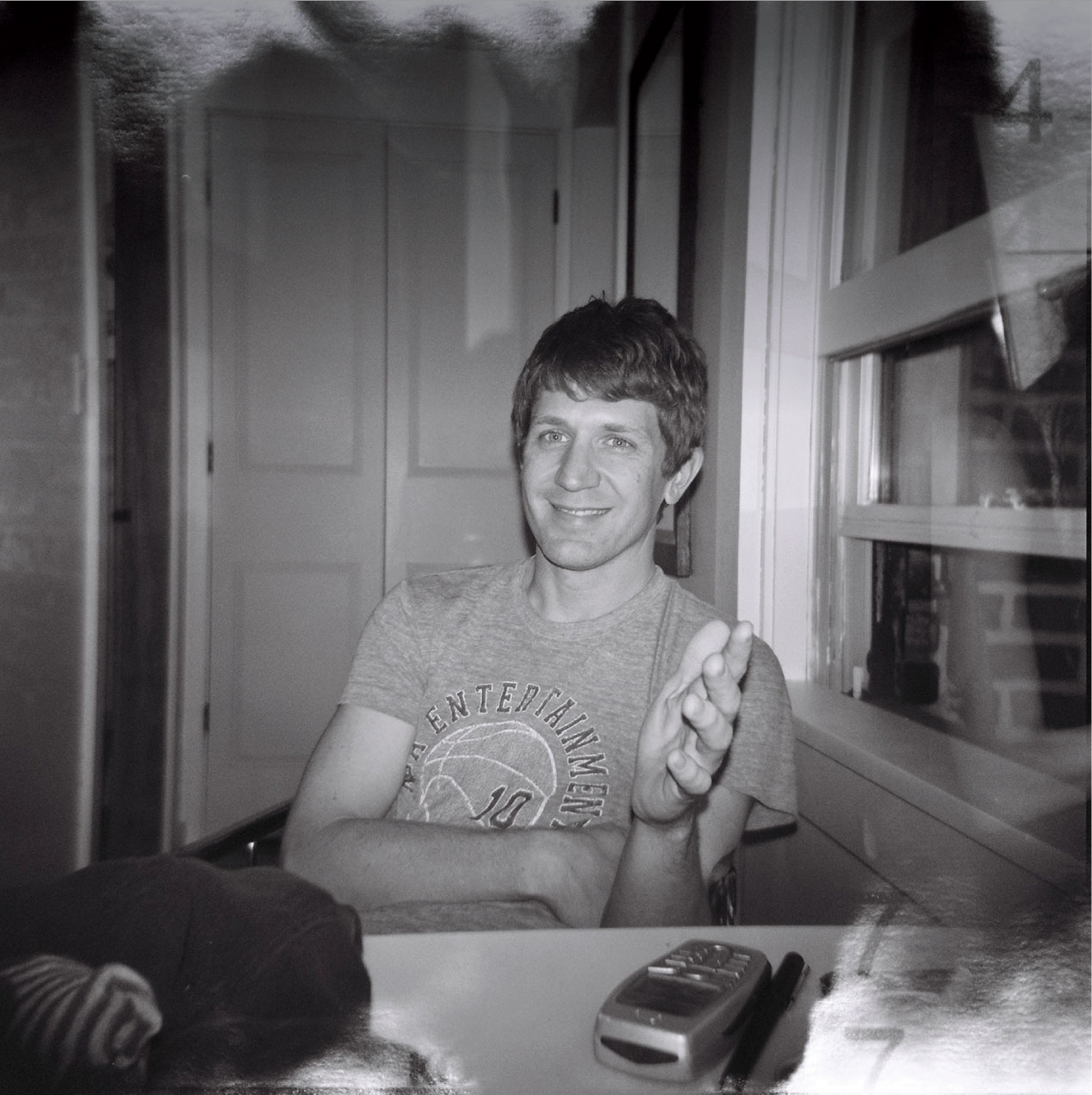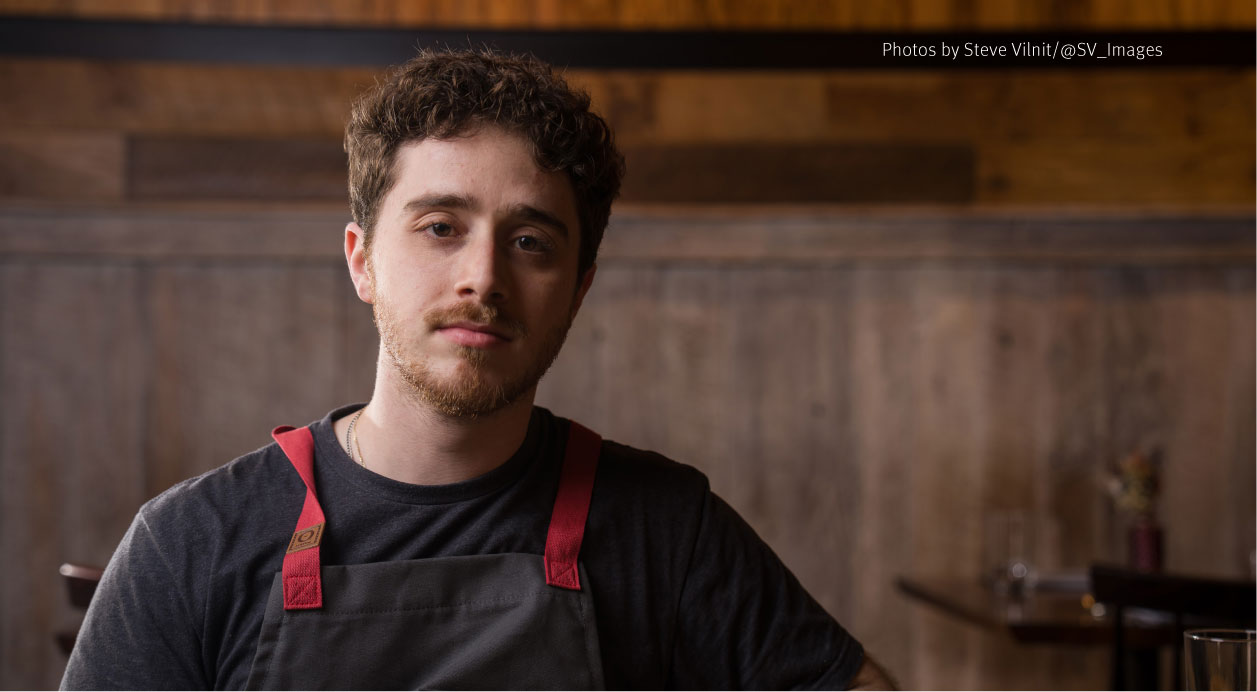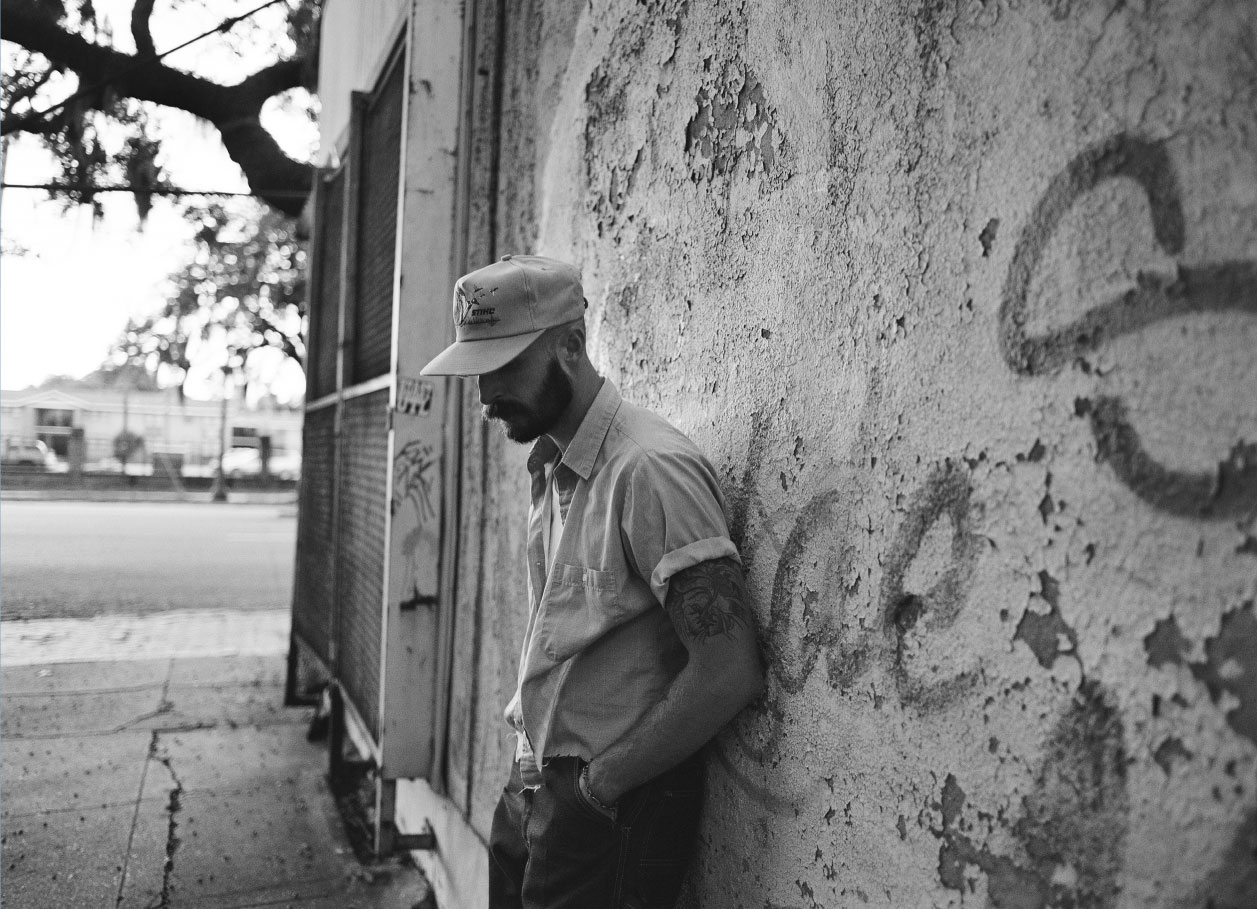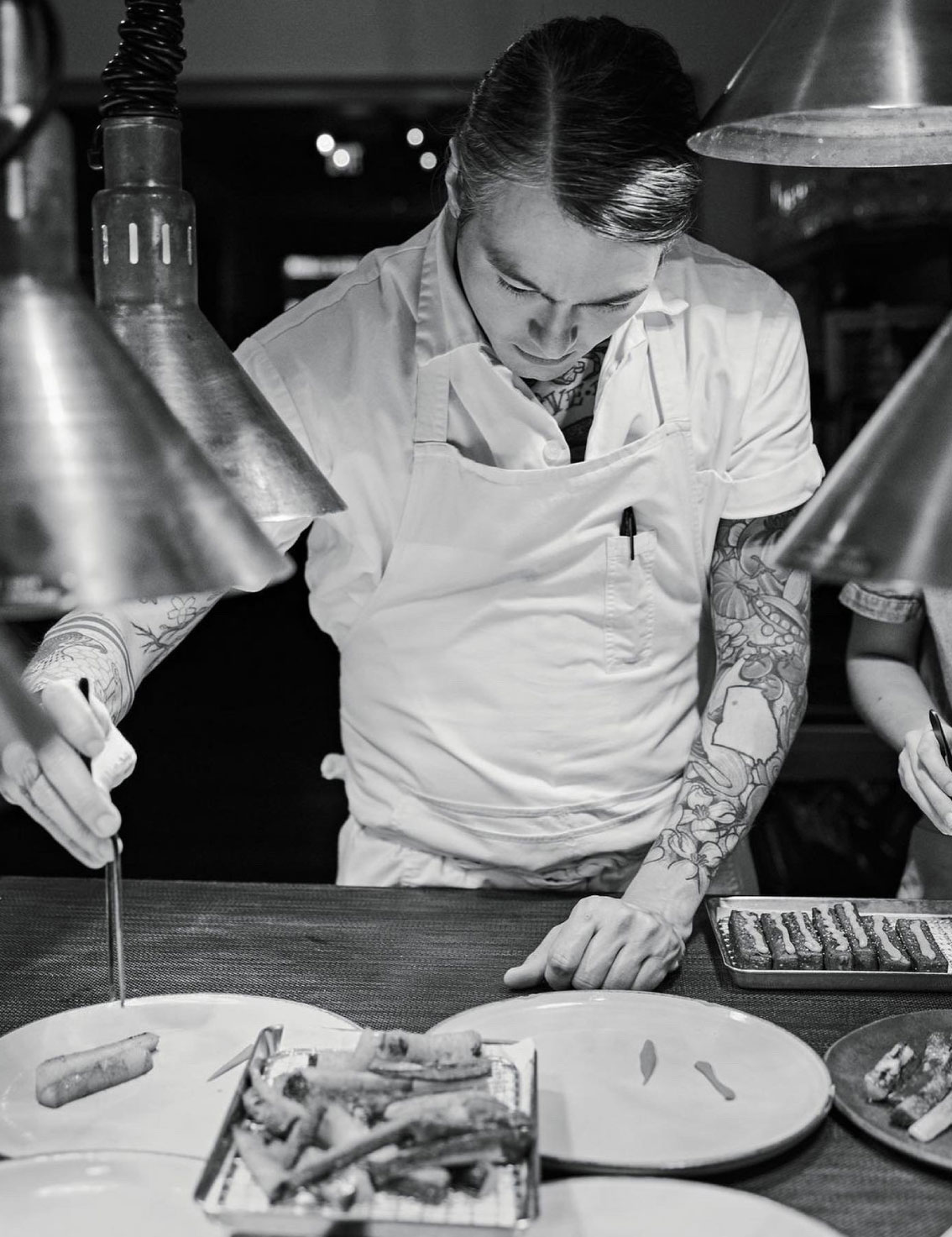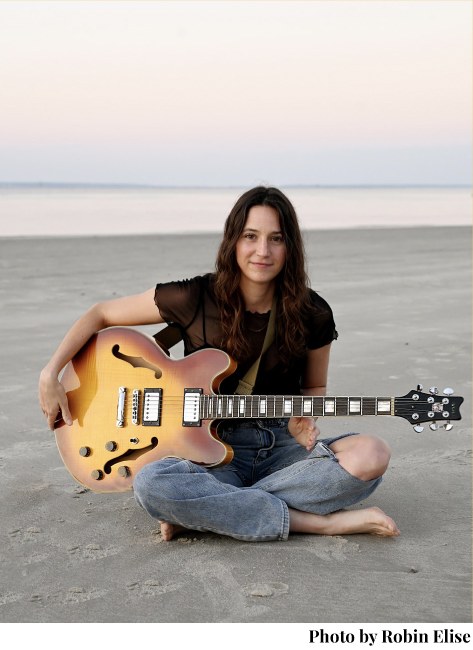
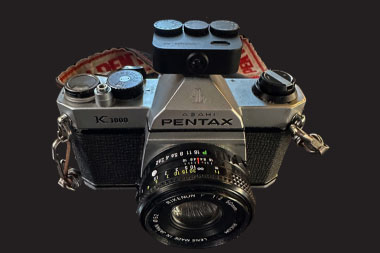
The camera belonged to Jonathan Sage’s father.
Jonathan found it while cleaning out a closet years after moving to Savannah. A Pentax K1000 from the late 1970s. Fully mechanical. Heavy in the hand. The kind of camera that does not guide you or correct you. It waits. It demands attention. And if you rush it, it gives you nothing in return.
That camera would end up shaping far more than how Jonathan took photographs. It became a quiet lesson in process, patience, and restraint, the same lessons he was beginning to absorb through his work at Savannah College of Art and Design. Creativity, he learned, does not reward urgency. It reveals itself slowly, only after you learn how to slow down with it.

Trusted by 70,000+ Savannah Locals
Get the stories, restaurant discoveries, events, and insider recommendations that locals already rely on.
Jonathan Sage came to Savannah chasing something creative, even if he did not yet know how to name it.
The path that brought him here looks conventional on paper. Detroit as a kid. Illinois for high school. College in Virginia. A corporate job in Jacksonville, working as a district sales manager for Frito Lay. Routes, numbers, structure. But underneath all of that was someone who paid attention. Someone who noticed rhythm, movement, atmosphere. Someone already tuned to things that could not be measured on a spreadsheet.
When his family moved to Savannah, he followed. The transfer made sense. But the city did something to him almost immediately.
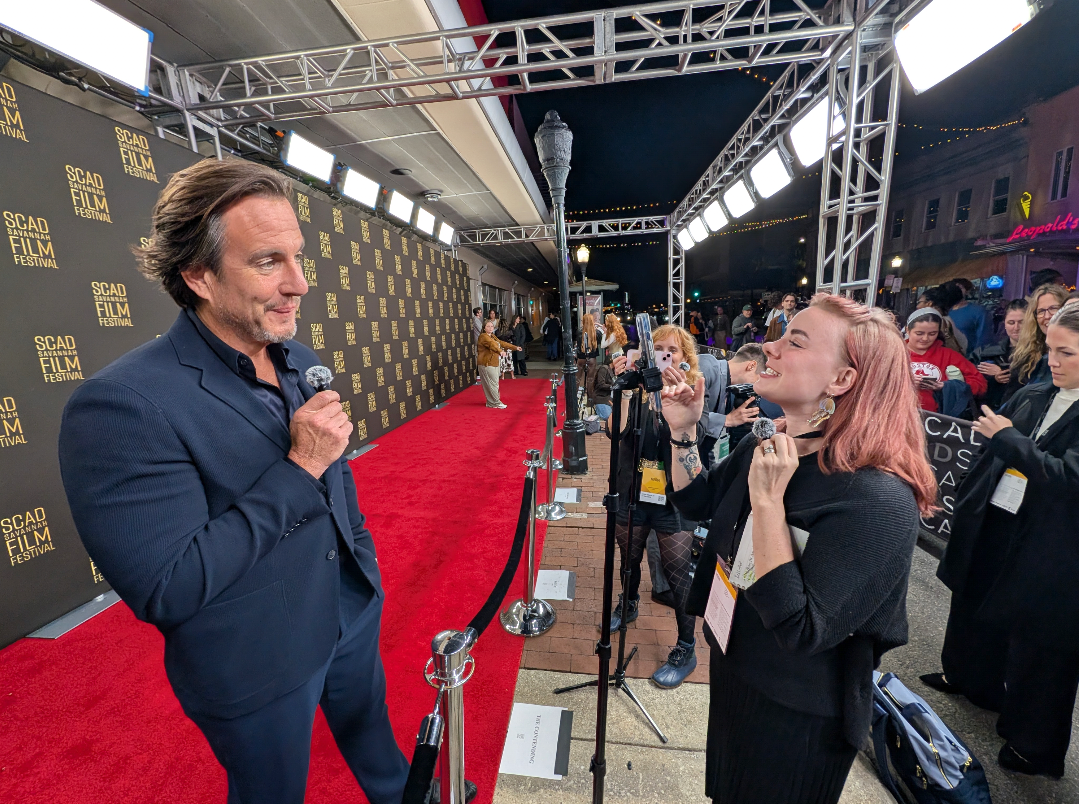
Then came the SCAD Architecture Ball.
“That was my first real exposure,” Jonathan says. “I remember walking in and thinking, I need to figure out how to work here.”
Not because it looked impressive, but because it felt alive.
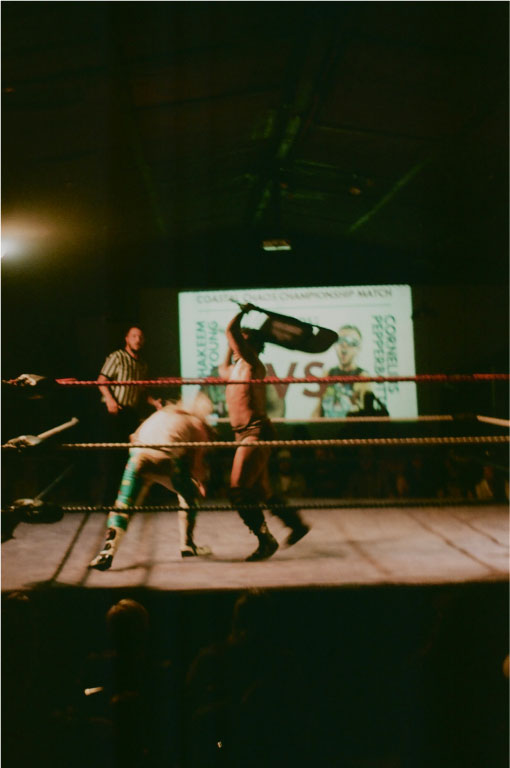
It took time. Savannah became home first. The creative pull stayed in the background, quietly persistent. Years later, the opening finally came, and Jonathan joined Savannah College of Art and Design as a PR coordinator. He has now spent more than four years there, nearly a decade in Savannah overall.
Working at SCAD refined something he already had.
Creativity there is not rushed. Ideas are given room. Students are allowed to sit inside uncertainty. Projects evolve slowly, deliberately, often uncomfortably. The institution does not reward speed. It rewards intention.
“You’re surrounded by people who are constantly slowing things down,” Jonathan says. “They’re thinking deeply about what they’re making and why.”
That environment became a framework for how he started living.
Photography had always been part of his life, but casually.
Digital. Fast. Lifestyle shots of friends and surf trips. Capture everything and sort it out later.
That changed when he found his father’s camera.
He took it on a surf trip to Morocco, assuming instinct would be enough.
It wasn’t.
“I didn’t load the film correctly,” he says. “Six rolls. Nothing came back.”
No images. No evidence. Just memory.
That failure was not discouraging. It was clarifying.
The camera did not allow shortcuts, and neither did the process Jonathan was watching unfold every day at SCAD. You could not skip steps. You could not rush meaning into existence. You had to slow down and understand the system before expecting results.
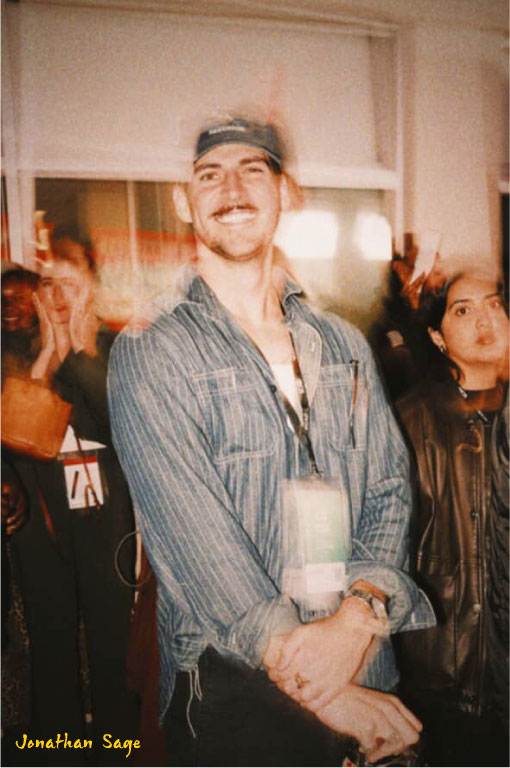
He learned the camera properly after that. Light metering. Film loading. Patience. The camera began traveling with him everywhere. El Salvador. Puerto Rico. Costa Rica. Australia. Iceland. Not as a statement, but as a discipline.
Film forced him to be present.
“You only get thirty six chances,” he says. “With digital, you’re holding the shutter down and figuring it out later. Film makes you decide before you press the button.”
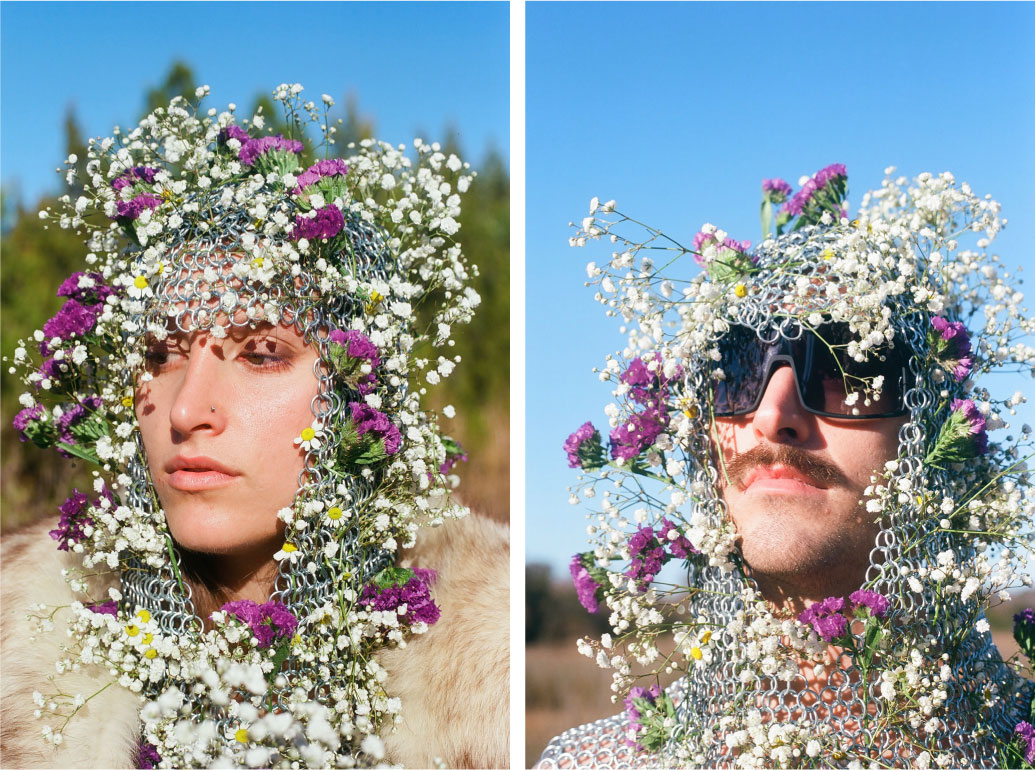
That mindset bled into everything else. How he watched people. How he moved through spaces. How he thought about creative work.
At SCAD, Jonathan lives between process and presentation. He sees projects before they are finished. He understands how much time exists between idea and execution. He watches students wrestle with doubt, revision, and restraint.
Photography became an extension of that lesson.
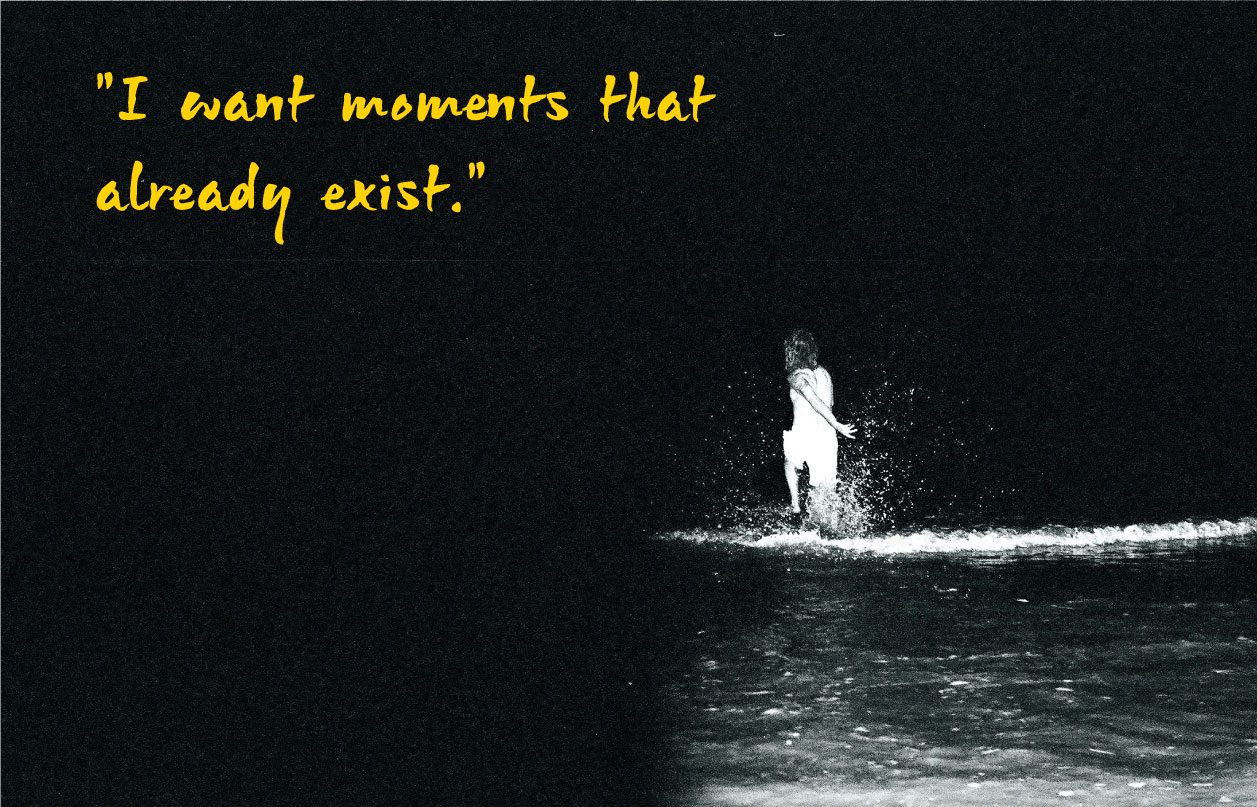
“I don’t like posed photos,” he says. “As soon as someone starts performing for the camera, I stop. I want moments that already exist.”
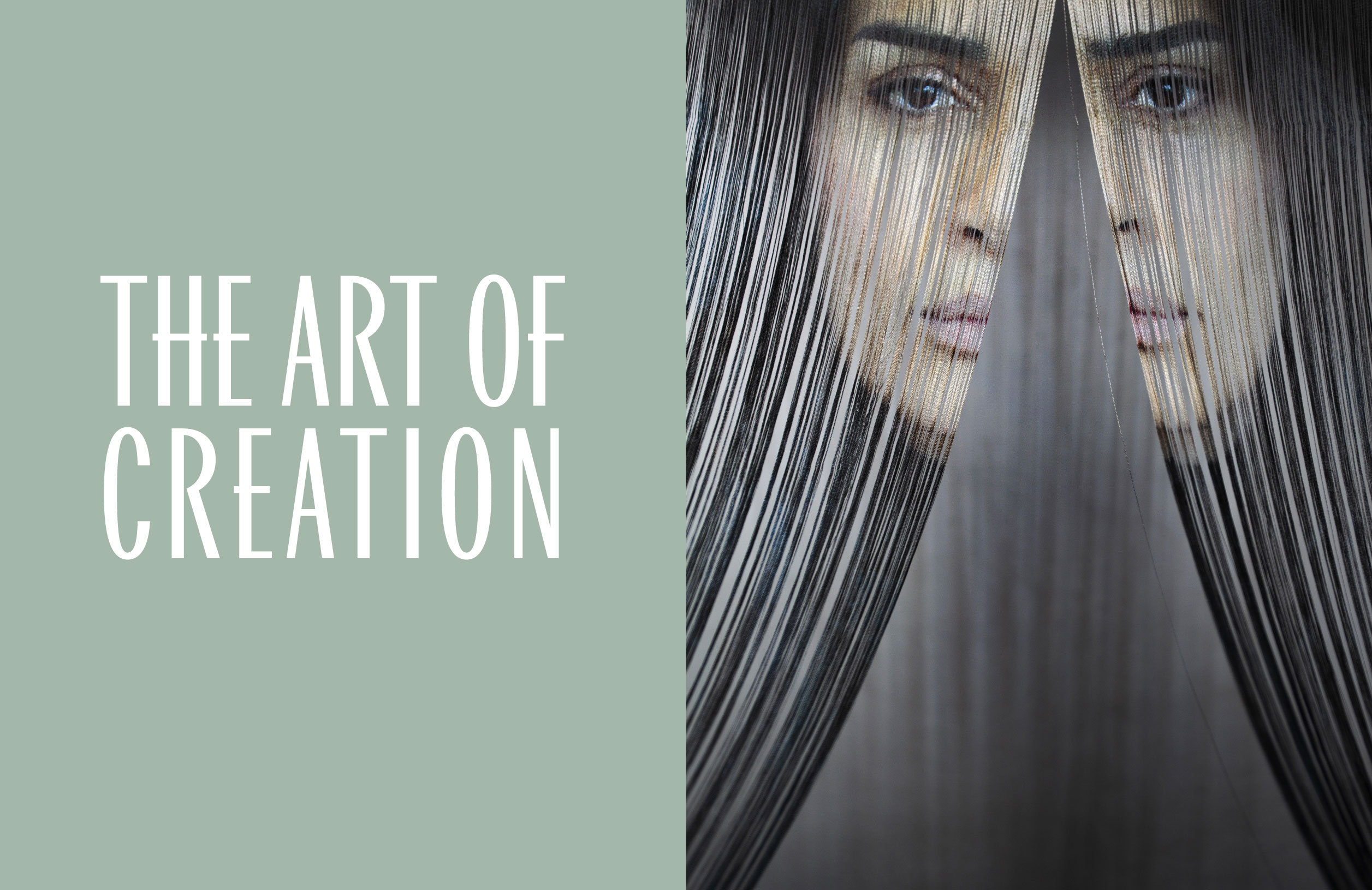
Recently, he pushed himself further, into direction and concept. A shoot built around a chain mail headpiece, flowers, and a marsh setting. A vision that required trust, collaboration, and commitment before a ny results existed.
“It was nerve wracking,” he says. “Because now other people were involved. Their time mattered.”
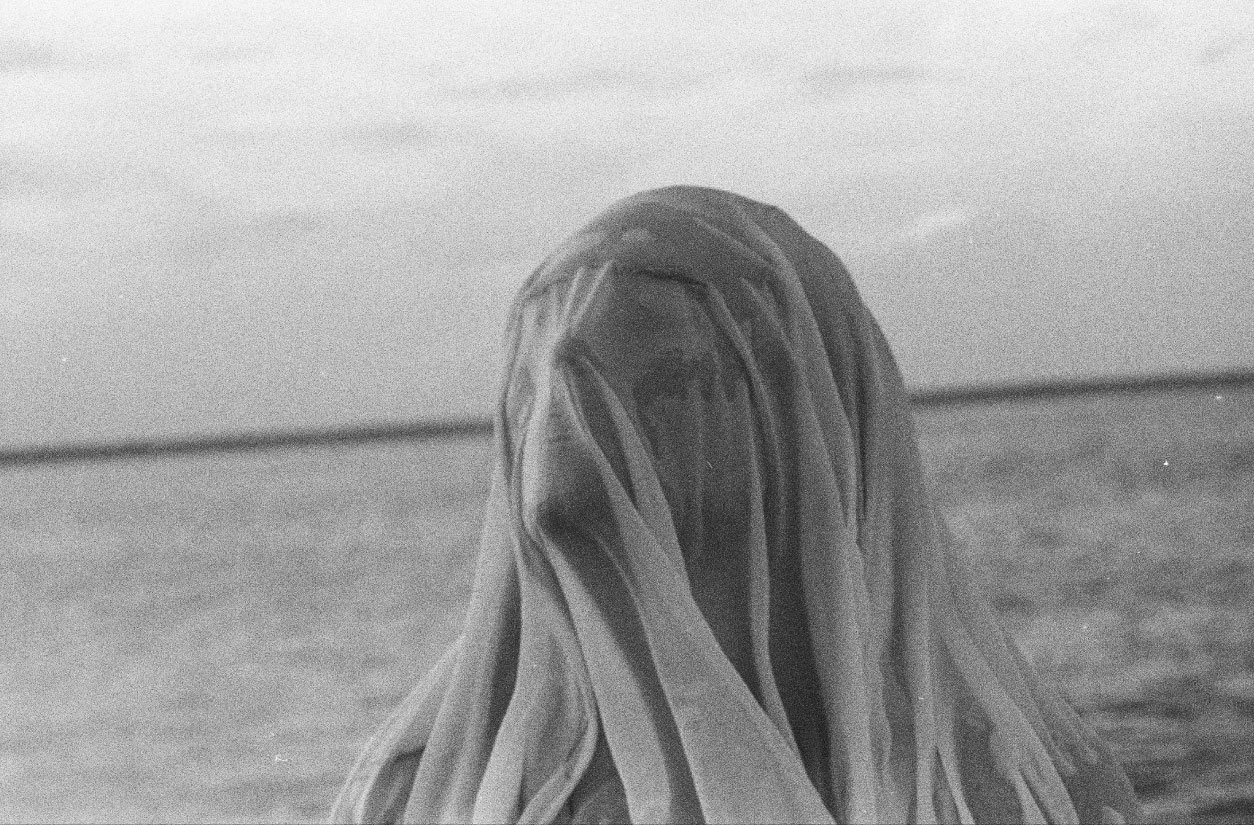
When the scans came back, they were right.
“It’s my favorite work I’ve done.”
Not because it was perfect, but because it honored the process.
That is where everything comes full circle.
His father’s camera taught him to slow down. SCAD taught him why that matters. Savannah gave him the space to practice both.
Analog film, like creative work, does not reward urgency. It rewards attention. Presence. Restraint.
Jonathan did not suddenly become creative when he arrived in Savannah. He arrived because he already was. The city, the institution, and a mechanical camera from another era simply gave that instinct a language.
Thirty six frames at a time.