Some restaurants use fire like a prop.
A flash of flame. A moment for the room to look up. A reminder that something primal is happening somewhere behind the pass. Here, the fire does not perform. It works.
You notice it because it will not let you ignore it.
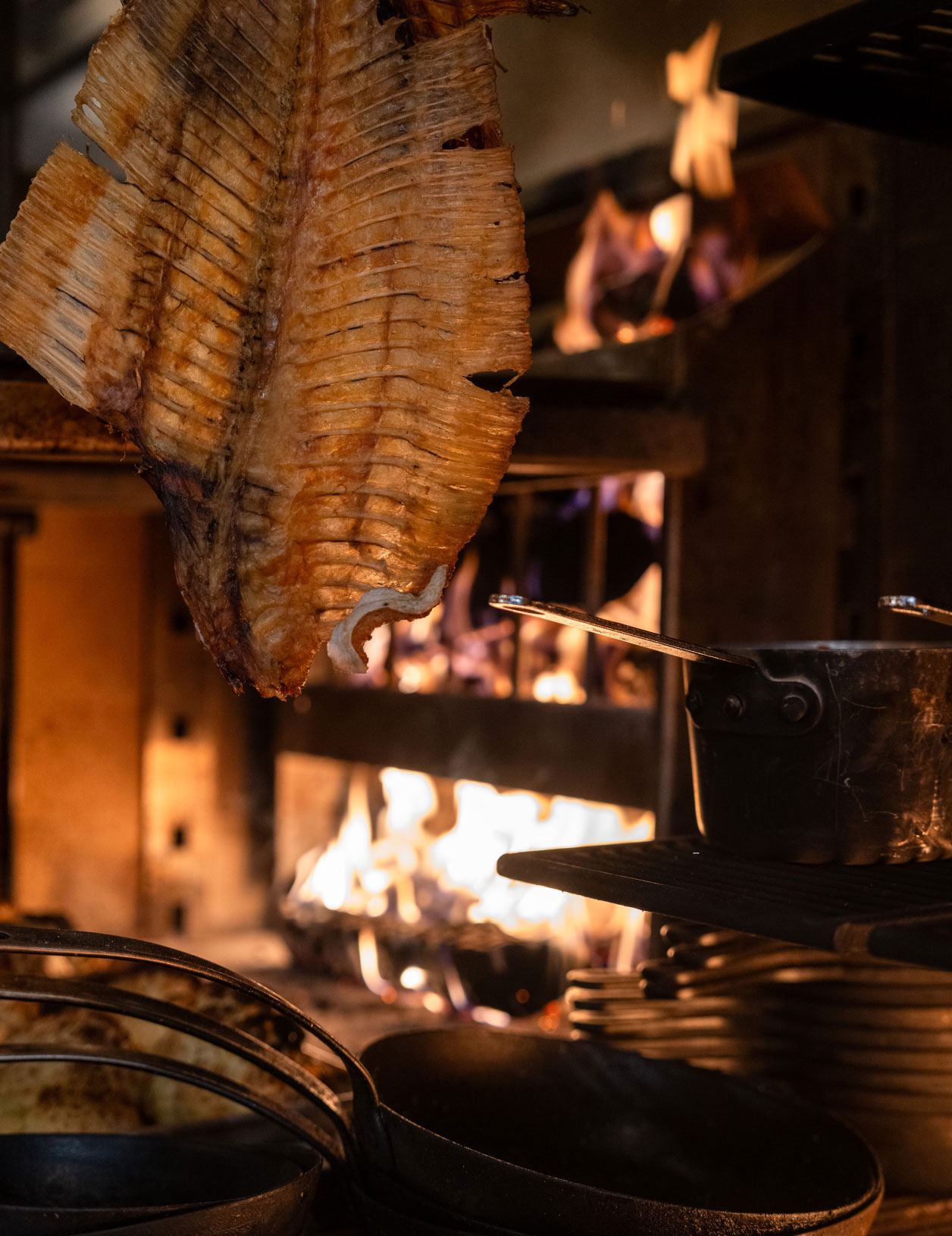
The hearth sits at the center like a living thing. It breathes. It shifts. It demands attention. There is no backup plan humming quietly in the background. No secondary system waiting to take over if someone loses focus. The fire is the system.
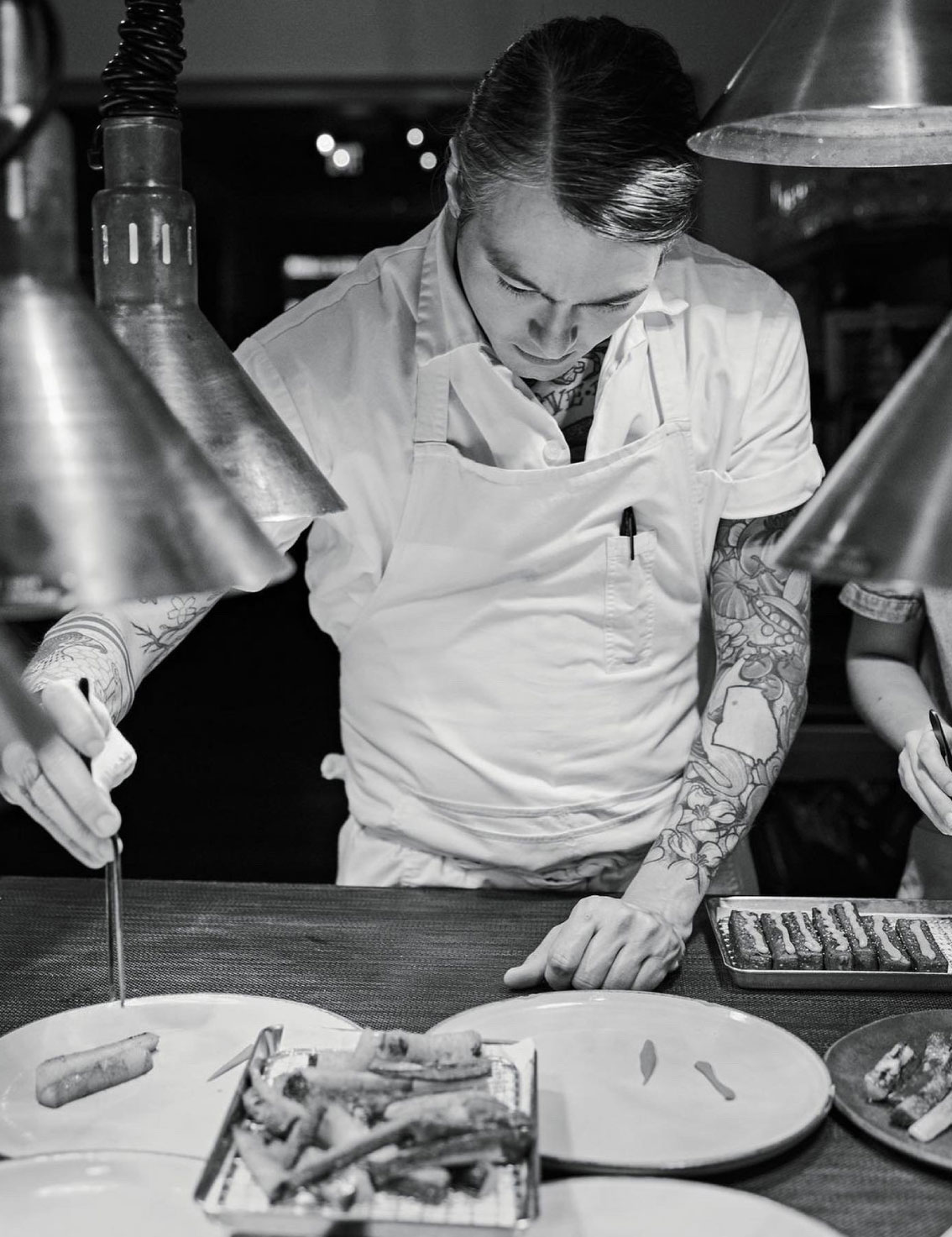
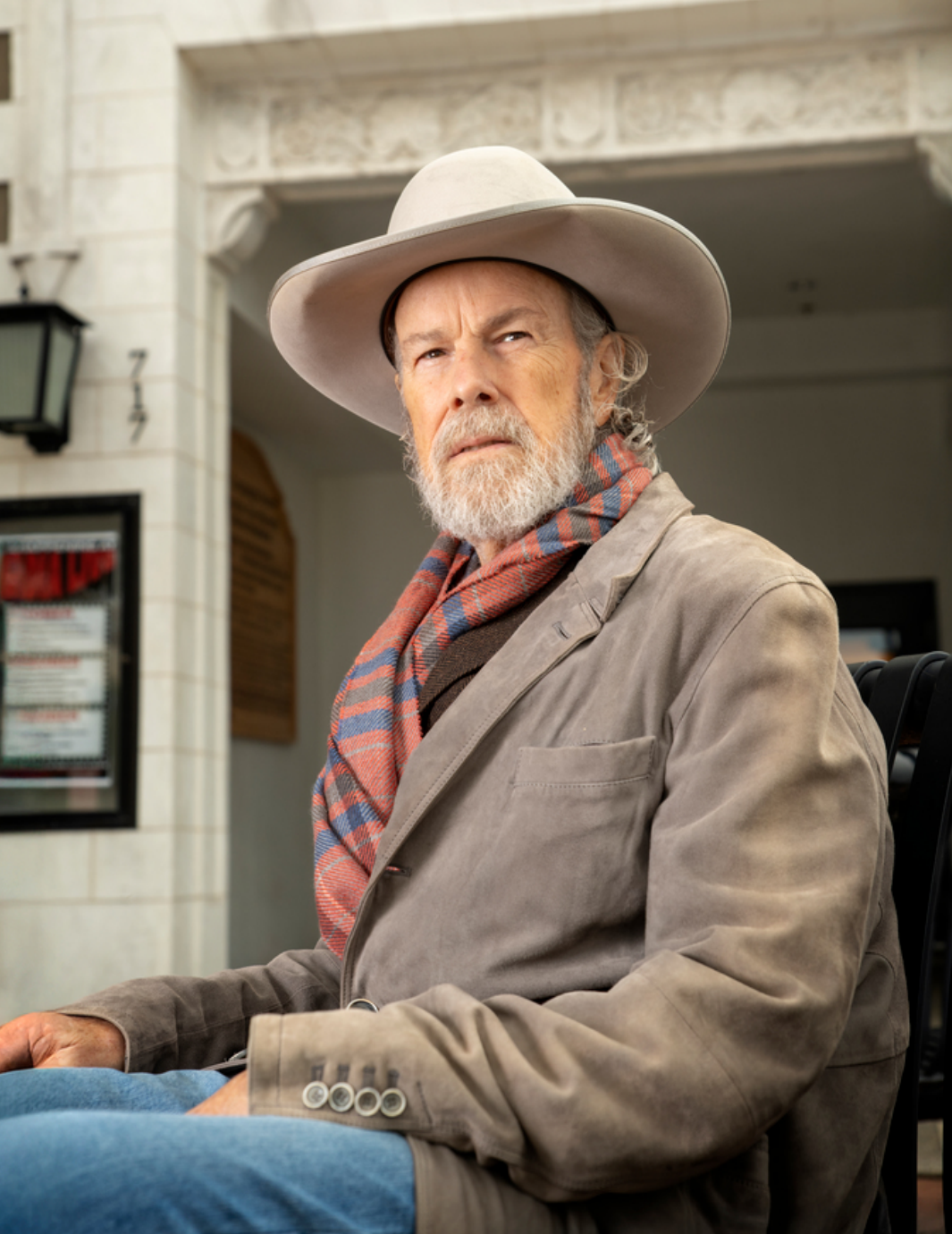
Charles Alexander explained it to me without romance, which somehow made it feel even more romantic.
“We primarily only use the hearth or the coal fired oven,” he said. “It constrains us, but it also focuses us.”
That word, constrains, is the giveaway. Most kitchens chase freedom. More equipment. More options. More ways out. This one chose the opposite. It chose a narrow path and decided to walk it with discipline.
In Savannah, open flame cooking is not new. You see it around town. But it is often one voice in a crowded conversation. Here, it is the conversation. Seafood is the star, not buried under technique or disguised by sauce, but placed directly in front of heat and handled with restraint.
The setup itself tells you how serious they are.
The hearth is the open fire pit, where most of the fish is cooked. Behind it sits a burn box, where hardwood logs are fed slowly, not for show, but to create embers. Those embers are harvested and moved by hand, placed exactly where they need to be, shaping heat like a sculptor shapes clay.
Then there is the charcoal fired oven, a Mibrasa, built to hold intense, even heat. No gimmicks. No shortcuts. Just pressure, time, and fire.
“The fire is always in flux,” Charles said. “You always have to be present.”
He described it like a dance, deciding when to burn more wood, when to pull coals, when to let the heat soften. It is work that refuses autopilot. Look away too long and the food will tell on you.
That constant attention changes how a menu comes together. You stop asking what you want to cook and start asking what the fire will allow today. That is where the creativity sneaks in.
They roast vegetables slowly on a shelf above the hearth, letting residual heat do the work. Onions soften and sweeten over time. Pineapples take on smoke without ever touching flame. They experiment with how smoke moves through fat, how a single ember can change oil or cream, how flavor can be layered without adding more ingredients.
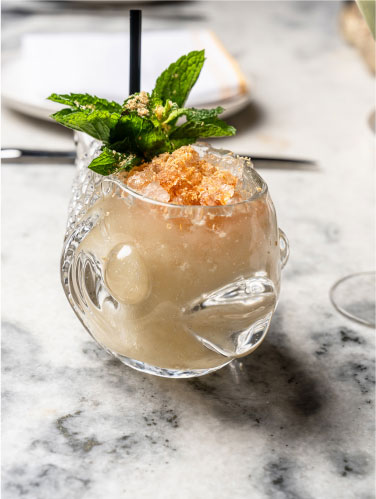
It is quiet experimentation. Thoughtful. Patient.
The seafood philosophy follows the same line.
Local oysters pulled from nearby waters. Shrimp sourced carefully. Fish coming in from Georgia’s coast. And when the product demands it, seafood flown in overnight from Maine, shipped straight off the boat and into the kitchen the next day.
That kind of sourcing does not leave room for hiding. Which is exactly the point.
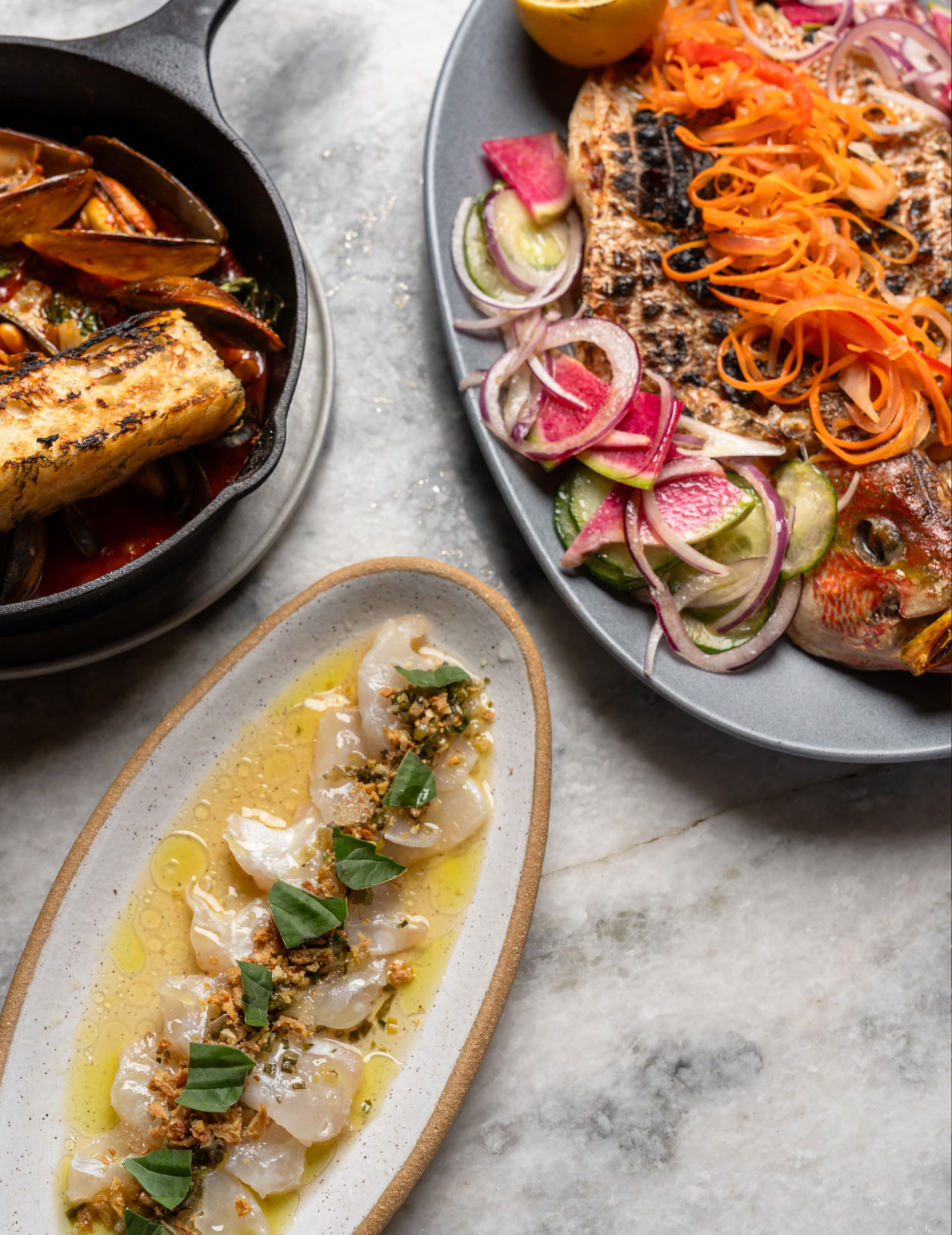
One of the dishes that stuck with Charles the most was not something dramatic off the hearth, but the crudo. Raw fish. Minimal handling. No heat to rescue mistakes.
They played with cures. Dry aging times. Texture. Each version leading to another idea. Fire still found its way in, through a charred scallion nuoc cham, fish sauce brightened with lime, finished with smoke.
It is a reminder that this place is not about fire for fire’s sake. It is about knowing when not to use it.
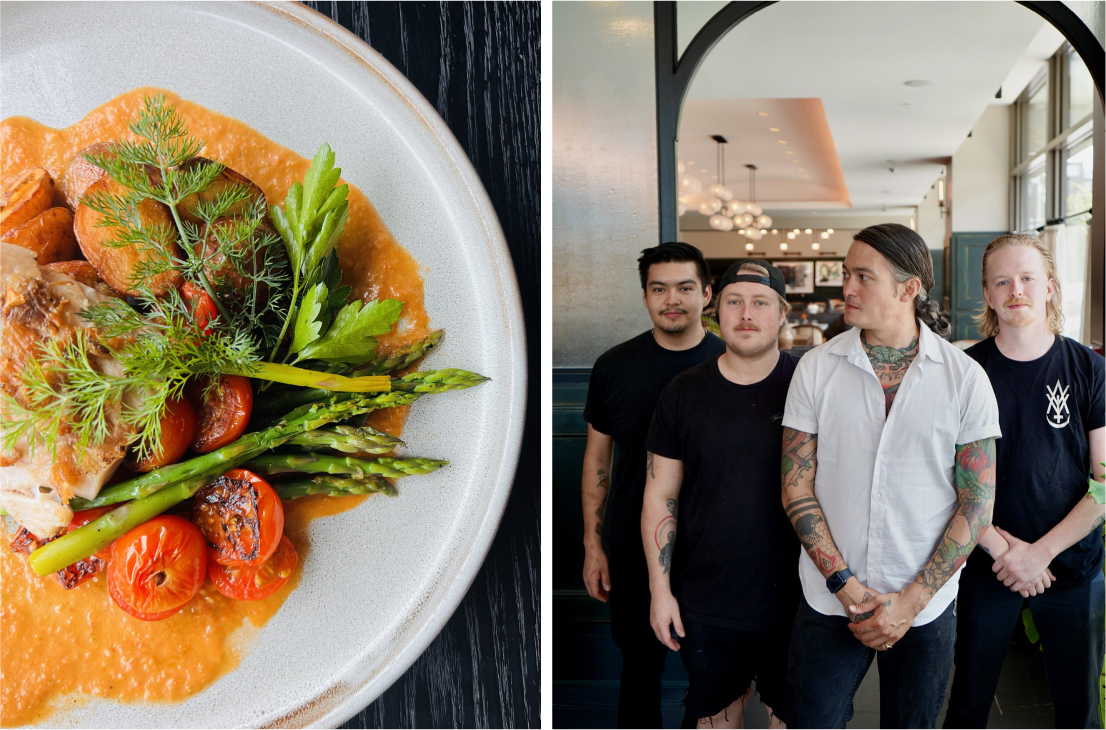
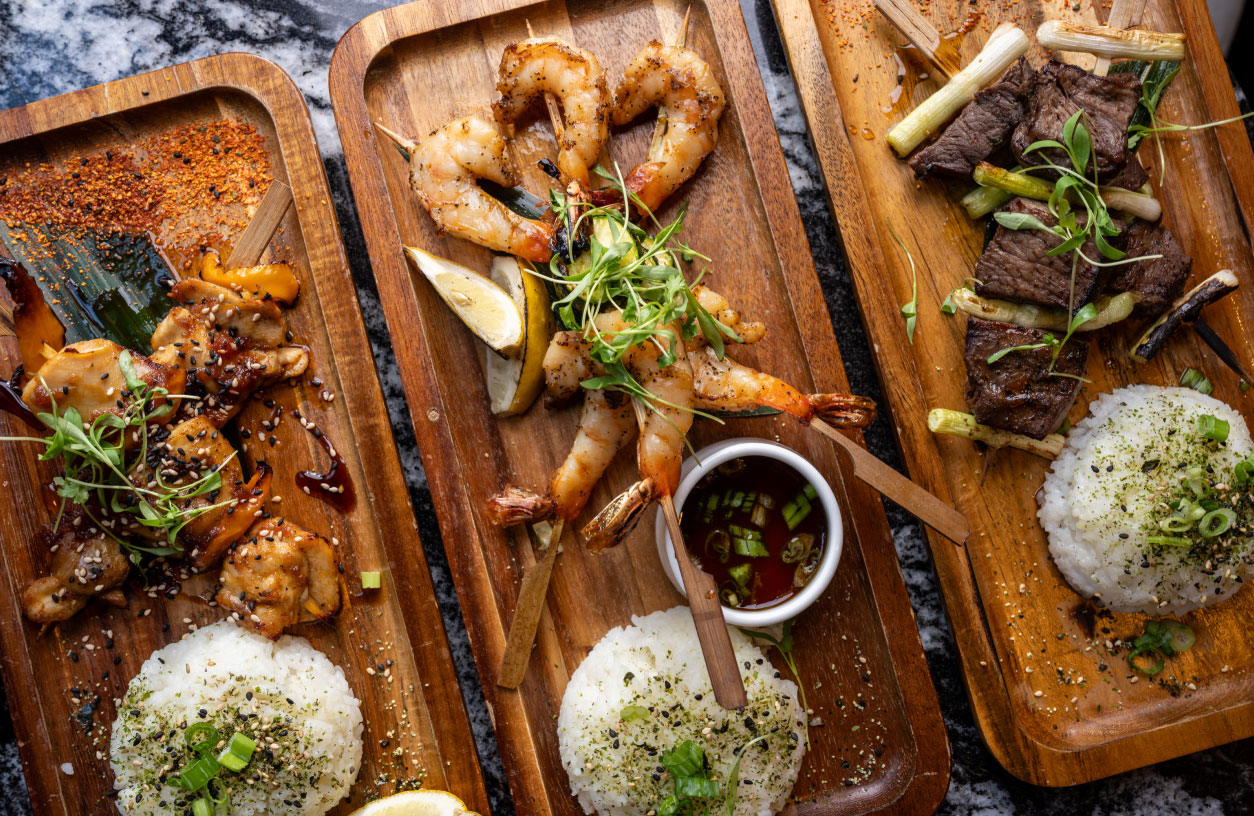
Even the non seafood dishes follow that rule. A dry aged New York strip cooked inside the charcoal oven until the fat renders and absorbs smoke, served simply with a slow roasted onion, kombu oil, and rosemary butter. Nothing extra. Nothing missing.
What ties it all together is restraint. The confidence to stop before the plate gets loud.
Charles said something near the end of our conversation that landed hard.
“Simplicity is not an absence of skill. It is the result of mastering restraint.”
That sentence could hang on the wall here and no one would question it.
This restaurant exists in a small but growing pocket of Savannah where chefs are thinking deeply about what the city can be, not by copying somewhere else, but by committing fully to their own ideas. Fire and fish. Heat and patience. Presence over speed.
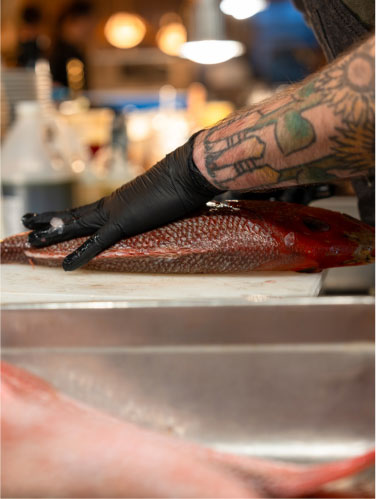
Open fire cooking is slower. Less predictable. More demanding. And that is exactly why it works here.
Because when a cook stays focused, when the ingredient is respected, and when the fire is allowed to be what it is, something elemental happens. Not flashy. Not forced. Just honest food, shaped by flame, served without apology.
And maybe that is the most Savannah thing of all.